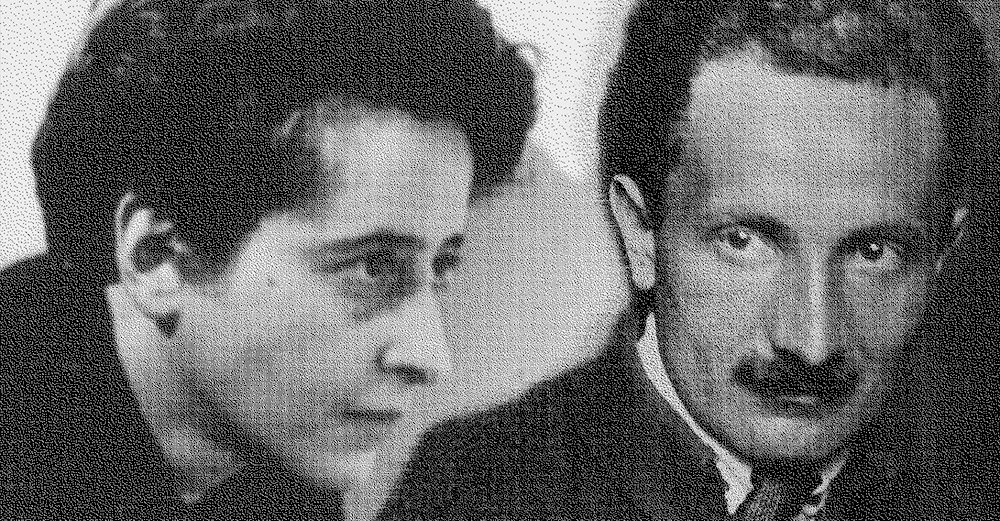
Martin Heidegger’s eightieth birthday was also the fiftieth anniversary of his public life, which he began not as an author—though he had already published a book on Duns Scotus—but as a university teacher. In barely three or four years since that first solid and interesting but still rather conventional study, he had become so different from its author that his students hardly knew about it. If it is true, as Plato once remarked, that “the beginning is also a god; so long as he dwells among men, he saves all things” (Laws 775), then the beginning in Heidegger’s case is neither the date of his birth (September 26, 1889, at Messkirch) nor the publication of his first book, but the first lecture courses and seminars which he held as a mere Privatdozent (instructor) and assistant to Husserl at the University of Freiburg in 1919.
Martin Heidegger at Eighty presents itself as a finely calibrated exercise in intellectual portraiture whose scholarly stake is to distinguish the phenomenon of Heidegger’s thinking—a sustained, path-laying activity—from the categorical fixities of doctrine or “philosophy” understood as a system. Its distinctive contribution lies in showing how the force of this thinking first appeared in the living practice of teaching and reading, in the rigor of stepwise questioning of canonical texts, and how this practice generated the peculiar fact of a fame without writings, a rumor without a circle, and an influence without an institutional program. The outer frame is the birthday occasion; the inner composition elaborates an argument about passionate thinking, its abode, its destructive fidelity to tradition, and its decisive conflict with the will, culminating in a sober assessment of the political misadventure and a final return to the measure of the primeval from which the work continues to draw its breath.
The essay begins by shifting the temporal coordinate of Heidegger’s “beginning” away from biographical and bibliographical markers to the first courses and seminars in Freiburg in 1919, when he was a Privatdozent with Husserl. The precision of this displacement reveals the governing claim: Heidegger’s entrance into public life is essentially pedagogical, not authorial. The text measures the significance of this claim by recalling that the unusual longevity and breadth of influence of Being and Time presupposed the preexisting authority of a teacher who had already transformed his audience’s sense of the philosophical task. It establishes, as evidence, the astonishing structure of a fame largely untethered from publication—“nothing written,” only lecture notes in circulation—and thus locates the origin of his impact in the event-form of thinking as practiced in the seminar room rather than in the discursive closure of a doctrine. The rumor of the “hidden king,” traveling through the networks of students rather than through public media, is not a sociological curiosity; it is the phenomenological index of a mode of intellectual life in which conceptual necessity takes shape as a way of questioning that alters what counts as a problem and what it means to read a text at all.
Arendt’s reconstruction of the university context serves as a diagnostic prologue to the central thesis. After the First World War the faculties responsible for more than professional training were experienced by serious students as a locus of disquiet. They found before them a landscape of schools—neo-Kantian, neo-Hegelian, neo-Platonic—or a disciplinary subdivision in which philosophy dissolved into an “ocean of boredom.” The phenomenological summons “to the things themselves” reallocates attention away from doctrinal edifices to the matters that solicit thought, but in Husserl this appears as an unrebellious, almost naïve turn, whereas in Scheler and especially in Heidegger it becomes the lever of a more originary reorientation. What drew students to Freiburg and, later, to Marburg was the perception that here one encountered achievement of those “things,” not by adding a new Weltanschauung to the marketplace of worldviews, but by reopening the past through a question that dissolves the protective crust of received interpretation. The philological-didactic technique is decisive: an entire semester devoted to a single Platonic dialogue, pressed forward step by step, until the doctrinal “theory of Ideas” vanishes as a theme and yields a newly urgent problematic. This method—whose familiarization today is precisely the index of its historical novelty—establishes the form of Heidegger’s “beginning” as a temporalization of reading itself.
The essay then specifies the nature of the activity at issue. Heidegger’s thought is characterized by Arendt as an intensively transitive thinking: the verb denken is not “thinking about” but thinking something. The transitivity signals an immersion that remains underground; it refuses to surface in the form of axioms or foundations achieved at depth and then laid out as a superstructure. The metaphor of pathway becomes the operative figure: he lays down wood-paths—Holzwege—that are beaten into the forest by the very work of clearing that the woodcutter performs. The collected Wegmarken—trail marks—are not monuments to a completed itinerary but directional signs stabilizing passages through a terrain that remains wild, and whose essence lies in the experience of passage rather than in arrival. The claim about “the end of philosophy” therefore does not provide a thesis for a manifesto; it crystallizes an accomplished fidelity to the tradition that has been driven to think metaphysics to its completion so that its collapse occurs “in a manner worthy of what had preceded it”—that is, as an immanent exhaustion rather than as a replacement by fashion or the administrative triumph of the “history of ideas.” This is why the historical effect—contributing to the fall of the old edifice—registers as a secondary consequence of a deeper practice of digging and clearing.
Because this practice is a living movement, it sets itself correlative tasks and confronts specific problems without adopting the teleology of a research program oriented to determinate results. Its activity is relentless, but the measure of success cannot be the production of a system. The internal criterion is rather the capacity to begin again, to retract, to turn back upon what has been said. Hence the peculiar texture of the corpus: each work reads as if beginning anew, while sometimes reusing already minted language as provisional markers for the current traverse. Arendt draws out the methodological nerve of this posture: thinking bears within itself a “critical question” regarding its own matter; it exhibits a “recklessness” that begins ever anew; it undertakes retractatio, an immanent rethinking of its previous paths. The internal critiques of Being and Time, the revision of an earlier interpretation of Platonic truth, and the protocol-seminar on Time and Being are presented as instances of the same structural motion, in which results undo themselves like Penelope’s veil, so that what has been spun by day is unspun at night and the work can recommence the next morning. The point is not romantic self-cancellation but a strict acknowledgment that in this mode of thought the product has no conceptual primacy over the activity that produced it.
From here the text introduces a set of anthropological and existential determinations that articulate the pathos of thinking. The portrait refuses the classic oppositions—reason versus passion, spirit versus life—by showing that in Heidegger thinking becomes a passion that orders and prevails through the other capacities. The tiny anecdote—Heidegger’s compressed “Aristotle was born, worked, and died”—functions as a condensed proposition about the de-biographizing force of thinking, in which the “I” that thinks becomes ageless and without qualities; it is not the self of consciousness, but the site at which time stands still amid the storm. In this sense thinking is solitary in the Platonic sense: a “soundless dialogue” always reverberating with an unsayable, and therefore unshareable, element. This unsayable—never reducible to the private—is the inexhaustible reserve from which thinking renews itself, but precisely because it cannot be fully articulated it imposes on thinking the mark of solitude, including the possibility that even the most sociable may be ruined by the residence it demands. The emphasis on residence is decisive for Arendt’s composition. The “abode” of thinking is not a romantic withdrawal but a condition of possibility for the very inversion of nearness and distance that defines thoughtful attentiveness.
The analysis of nearness and remoteness provides the essay’s conceptual hinge. Thinking brings-into-nearness the distant. The concrete illustration—travels whose sights become truly near only in recollection after one has left them behind—does not trivialize the claim; it registers a transposition of the senses in which meaning is disclosed only when presence as sensory proximity is relaxed. Consequently, the ordinary world of human affairs appears to thinking as a domain of the “withdrawal of Being”—a phrase that here indicates the constitutive loss of what matters to thought within the rhythms and urgencies of action. Conversely, the annulment of this withdrawal is purchased at the price of a retreat from that world; the stillness proper to the abode both shields thinking from noise and transfigures its relation to what it thematizes. The asymmetry is not a moralizing judgment about everyday life; it is a structural observation about how the concern of thinking cleaves to the absent and how the power of thinking intensifies as the pressure of immediate presence relaxes. Aristotle’s warning against the fantasy of the philosopher-king—ta tōn anthrōpōn pragmata remain affairs of another order—receives here a renewed pertinence: the very conditions that render thoughtful nearness possible estrange thought from the arena in which ruling is practiced.
The narrative then turns to the classical scene of ridicule—Thales and the Thracian girl—as a way to index a civilizational temptation: to convert the internal sovereignty of the abode of thought into external sovereignty over human things. The laughter that greets the philosopher’s fall into the well is an ancient prophylactic against this confusion; yet the history of philosophy, hinging on Plato, seldom gives laughter its due. The excursus on laughter—Plato’s prohibitions, the guardians’ solemnity, the interpretive habit of avoiding a smile when recounting the philosopher’s Sicilian venture—prepares the essay’s most delicate transition: the move from the solitude of thinking to the thought’s collision with political power. Here the compositional sequence is carefully judged. Arendt neither suppresses nor sensationalizes Heidegger’s public errancy. Instead she locates the episode within the very structure of thinking’s residence and its susceptibility to a deformation that mistakes the stillness of the abode for a mastery over the storm of human affairs.
This sets the stage for the essay’s crucial theoretical disclosure: the discovery—by Heidegger—of the essence of will as “the will to will,” the self-intensifying movement of willing whose most perspicuous modern crystallization is the “will to power.” Kant and Nietzsche furnish powerful analyses of the will, yet, on Arendt’s account, none before Heidegger grasped how profoundly the nature of willing stands opposed to thinking and corrodes it from within. The alternative to the will is Gelassenheit—letting-be, composure, release, a disciplined relaxation that is the appropriate disposition of thinking. The paradoxical formulation “I will non-willing” names an ascetical operation: a weaning from will that releases one into a thinking that is no longer a willing. The argument does not advertise a quietistic ideal; it identifies a necessary limit condition for thinking as thinking, and thereby illuminates why the thinker’s political temptation would, under modern conditions, take the specific form of an affinity with tyrannical decision. For the will simplifies, commands, and condenses; thinking stretches, questions, and withdraws. The error is not a psychological defect but a structural misalignment of dispositions.
Arendt then articulates a broader diagnosis. The attraction of thinkers to tyrants is a recognizable regularity—a déformation professionnelle—not adequately explained by conjunctures or by characterological constants. Even the great, when they depart from the occasional acceptance of wonder into its adoption as a permanent address, may incline toward decisionistic concentrations of power, because the habits appropriate to the stillness of thinking distort the perception of the field in which action occurs. Kant appears as the notable exception, a point of measure rather than a polemical aside. The fairness of the portrait lies in its refusal either to dissolve the episode into impersonal forces or to excuse it by appeal to greatness; instead, it asks what the collision revealed and what was learned in its aftermath. The answer is twofold: Heidegger was driven back into his proper residence; he settled within his thinking the experience of collision through the very analysis of will and release that thereafter marked his later path.
The essay’s concluding movement returns to the beginning, now transfigured. The wind that blows through Heidegger’s thinking does not originate in the tempest of the twentieth century, any more than Plato’s owes its force to the specific storms of the fourth century BCE. The sobriety of this claim cuts two ways. It refuses to romanticize thinking as unworldly vapor, because the paths and trail-marks were laid across a textual earth by a pedagogy of meticulous reading. And it refuses to reduce thinking to a historical role, because the collapse of metaphysics—though momentous—remains a consequence, not the core. What remains is the perfection of a doing whose products recede behind the doing, a perfection that in falling back to its source returns the finite walker to the inexhaustible measure of the primeval. In this sense the outer frame—the eightieth birthday, the fiftieth anniversary of public life—serves as a temporal mirror in which the beginning appears as the abiding dimension of the work: the beginning as an ever-renewed act of laying a path, of setting a mark, of releasing the will in order to let thinking be.
The argument of the piece can now be restated in a more explicit register. First, the historical fact of Heidegger’s early renown prior to Being and Time becomes the key to understanding what Arendt means by “Heidegger’s thinking.” If influence without writings is possible, it is because the “object of scholarship” is decisively subordinated to a “matter of thought”; and because thinking, where it exists, can reshape the very visibility of the past by displacing doctrine with problem. The lecture hall thus becomes the laboratory in which a living method—pursuit of a single dialogue until the doctrine vanishes—discloses that tradition had not been exhausted but only dulled by repetition. As this method passes into writing, the books bear the imprint of the path: provisional lexicons, strategic markers, and an ever-renewed beginning that regards its own results as material for further passage. The consequence is a double motion that Arendt carefully calibrates. On the one hand, a network of subterranean tunnels undercuts an edifice that had already become uninhabitable; on the other, the destruction has dignity because the pathways have been laid with fidelity to the texts that supported the building. The “end of philosophy” is thus neither victory nor defeat; it is a naming of the point at which that particular building cannot be repaired without unfaithfulness to its materials, and at which the only responsible act is to remain with the matter that had always exceeded the house that sheltered it.
Second, the essay articulates the ethos of this thinking as a passion whose proper climate is stillness. The solitude of the “soundless dialogue,” the experience of an unsayable remainder in every articulation, and the inversion of nearness and distance are not atmospheric details but methodological necessities. They explain why Arendt insists on “residence.” For to think is to stand where presence must withdraw so that meaning may draw near; and to remain there long enough that what is thought may come into its own. From this it follows that the pathos of thinking is in friction with the economy of willing. The will, especially in its modern self-augmenting form, is ill-suited to an activity that begins again, retracts, and lays trail-marks for others without appropriating the path as property. The tension is not merely subjective; it structures the field of modern action, in which technology and power couple to produce conditions that interpellate the thinker as a potential decider. The severity of Arendt’s diagnosis is that even the best may be tempted here; the sobriety of her judgment is that what counts is whether the encounter clarifies the matter of thought. Heidegger’s later attention to Gelassenheit is presented as such a clarification.
Third, the composition integrates a civic lesson without moralism. The excursus on laughter restrains the philosophical imagination that would abolish ridicule in the name of high seriousness. The detail is not incidental. It suggests that philosophy’s political hazard lies in its forgetfulness of the common sense by which the peasant girl sees what lies at one’s feet. Where this forgetfulness hardens into program, it seeks a ruler; where it remains self-aware, it recognizes its own abode and withdraws from the fantasy of rule. If some thinkers bend toward tyranny, it is because the inner orientation toward essential simplicity and command over oneself can be misrecognized as aptitude for command over others. Arendt’s carefully chosen contrast—Kant—marks a standard by which the thinker can remain responsive to the limits of thinking in the realm of action. But even here the essay avoids procedural generalization. Its fidelity is to its subject: to the ways in which Heidegger’s own pathways, after collision, return to clearing and to release.
The work’s framing elements—birthday, anniversary, translator’s notice—function as modest paratexts that underscore the essay’s restraint. Translation is not a neutral conduit here; it belongs to the same order as the trail-mark. Even the brief notes about forthcoming translations and the identification of textual sources further emphasize that Arendt’s description is internally warranted by Heidegger’s own writings while refusing to overpopulate the scene with secondary authorities. The line is held: remain with the matter of the text, present its method, present its claims, test them by their coherence with the lived evidence of teaching, reading, retracting, and releasing. In this sense the composition sequence itself models what it describes. It begins from the lived beginning in Freiburg; proceeds to the methodological heart—thinking as path-laying; follows with the anthropological and existential clarifications of solitude, stillness, and nearness; engages the political collision as a structural risk exposed by the will; and returns, released, to the beginning now seen as an abiding law, concluding with the image of the wind from the primeval that continues to move through the paths laid down.
One may, to conclude, formulate the essay’s contribution as a threefold clarification. It clarifies the topology of thinking by locating its abode and describing its climate—stillness, recollection, distance brought near. It clarifies the praxis of thinking by attending to its transitive digging, its trail-marks, and its immanent retractions that keep the beginning alive. And it clarifies the ethical-political tension between willing and thinking by showing how the modern intensification of will tends toward decisionistic fantasies into which the thinker can be drawn, and how the only faithful counter-movement is a release that lets thinking be. The close, therefore, neither absolves nor condemns; it situates. The “hidden king” is disclosed as a teacher whose realm is the wood of thought, whose roads are wood-paths that lead nowhere outside but everywhere within; and whose enduring influence—like a wind that does not originate in the century—returns what is perfect to its source. In naming this, Martin Heidegger at Eighty accomplishes what it ascribes to its subject: it lets the matter show itself by clearing a space in which it can be seen, and then withdraws, leaving behind trail-marks precise enough for others to find their way.
 Simon Gros
Leave a comment