- Intro
- Ontology
- Illusion
- Metaphilosophy
- Disaster
- Destiny
- Censorship
- Failure of Internationalism
- Fragmentation of Ontology
- Of the Abyss & the Void
- Disgusting Sexuality
- End of a War
- Micropolitics of Borders
- Metaphysical Implied Corporeal Hypothesis
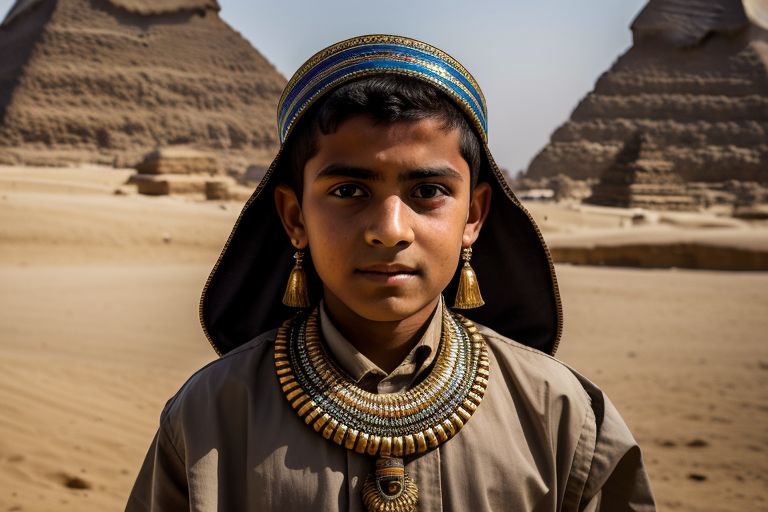
- Tutankamon, The Son-King
- Acumen & Evil
- Emerging Fields
- With Us, Capitalism is Genocide
- From Zizians to Zizekians
Time and myth combine in a tense fabric of human reality, where ancient narratives echo through the ages to fracture eras and fuel conflicts. In the present day’s turbulent political events, one discerns the shadows of primordial mythological structures—old gods and founding heroes haunting modern battlefields. The life of the Egyptian pharaoh Tutankamon (Tutankhamun) offers a symbolic entry point into our questioning. He appears not merely as a long-dead boy king, but as a metaphysical figure: the son-king, heir to a disrupted mythic order, compelled to mend a rupture in time. Tutankamon’s story exemplifies how a past mythology, when forcibly changed, creates fissures in history and war that only new mythic structures (born from the old) can attempt to heal.
His reign, though brief, came at the twilight of a religious revolution and the restoration of an older faith. In that transition we find the triadic movement of time described by Schelling, and the deep psychological inheritance described by Freud, converging to illuminate how mythological inheritances transform historical and ontological reality. The task here is a rigorous examination of these ideas: a journey through Egyptian antiquity and psychoanalytic theory into the very ontology of time, myth, and conflict—drawing lines from the ancient cults of gods to the trenches of modern ideological strife. Our inquiry treats myths as serious ontological data that shape human reality across millennia. It is an attempt to understand how a murdered past speaks in dreams to the present, and how the son-king of one age becomes the progenitor of the next mythic order in another.
The German philosopher F.W.J. Schelling provides a conceptual framework for understanding time’s layered structure, one that proves illuminating for mythic transmission. Schelling envisioned time not as a mere linear sequence but as a dynamic triad of Past, Present, and Future, each defined by opposing forces in tension.
In Schelling’s unfinished Weltalter (Ages of the World) project, he planned to articulate the world’s past, present, and future as three grand phases, seeing them as distinct to human perspective but united in the eternal realm. Crucially, Schelling argues that the same fundamental conflicts persist through all ages of time, though taking different guises in each.
The basis of his vision was a polarity between what he calls an “unconscious, dark principle” and a “conscious principle” in both the human soul and the divine. The past, in this schema, is not truly past; it is a dark, unarticulated ground that still throbs beneath the daylight of the present. The present is the arena of struggle where conscious order grapples with that unconscious inheritance, and the future holds the promise (or threat) of their reconciliation or further conflict.
Schelling even suggests that without opposition—without some latent force carried from the past into the present—there would be no movement, no “life and no sense of development” in reality. This triadic structure implies that history is driven by ancient energies seeking expression, and that each “now” contains spectral traces of a “before” that strive toward a “to come.”
Ontologically, then, human reality is not a neutral blank slate updated each moment, but rather a palimpsest of prior realities. Mythology, as one of the most profound expressions of humanity’s self-understanding, can be seen as a primary vehicle through which the past exerts its force within the present. A myth once formed does not vanish even if its public cult fades; it sinks into the undercurrents of culture and psyche, becoming part of that dark, unconscious principle that Schelling spoke of.
When conditions ripen—socially or psychologically—those mythic forces surge up, transforming the course of history, sometimes violently. In this light, mythological inheritances are not harmless stories of yore; they are active ontological constituents of reality, waiting in the wings of time. When they reappear or are challenged, the very structure of time seems to crack: past and present collide, and war often follows as the shockwave of that collision.
No historical moment illustrates these ideas more vividly than the religious revolution of ancient Egypt in the 14th century BCE and its aftermath. The pharaoh Akhenaten had upended centuries of Egyptian polytheism by instituting the worship of a single supreme deity, the Aten (the sun disk), displacing the traditional gods—foremost among them Amun.
This was a bold forging of a new mythological structure out of an old one: Akhenaten did not invent the sun god, but elevated it to exclusive prominence, effectively attempting the world’s first recorded monotheistic religion. In doing so, he fractured the established order of Egypt, sending ripples of chaos through the social and political fabric. Temples of older gods were closed, their names defaced; the capital was moved to a new city dedicated to Aten. We might say that Akhenaten tried to overwrite the “Past” age with a “Future” vision, leaping over the Present—an affront to the slow triadic rhythm of time. The reaction was dramatic. After Akhenaten’s death, his reforms were swiftly undone. The young Tutankhaten—Akhenaten’s son—was installed as king and soon renamed Tutankhamun, literally “Living Image of Amun,” as he reinstated the worship of the very god his father had shunned.
The name change was far more than political expedience; it was rich in metaphysical symbolism. The son-king, whose very identity had been tied to the new sun-cult (Aten), now symbolically died to that identity and was reborn under the aegis of the old father-god (Amun). In this reversal we see a classic pattern: a new myth (Aten) is derived from an older one (the solar cult within Egyptian religion) but in attempting to supplant all other myths, it creates a schism. The result is conflict—perhaps not a war in the modern sense, but a profound political and spiritual crisis. Tutankamon’s reign was devoted to healing this fracture. The famous “Restoration Stela” from his reign records how “He restored everything that was ruined… He has vanquished chaos from the whole land and has restored Ma’at [divine order]”.
The text paints the preceding Amarna period (Akhenaten’s era) as a time when “the world was in chaos and the gods had turned their backs on this land”, until the young king reestablished the temples and the favor of the gods. Notably, the inscription has the boy king proclaim his work for “his father Amun”, casting the restoration explicitly in terms of a son’s service to a father. Here the “father” is a deity rather than a human parent, but the metaphor is powerful: the son-king restoring the primacy of the father-god.
In effect, Tutankamon’s role was to reconnect the Present to the Past, to re-anchor Egyptian reality in its former mythic structure after the upheaval. The ontological stakes of this restoration were enormous; in Egyptian cosmology, maintaining Ma’at (order) against isfet (chaos) was the king’s sacred duty. By asserting that he had made the land “as it was at the time of creation”. Tutankamon invoked the mythic past (the creation era) as a template for the present. This is a paradigmatic example of a society attempting to heal a tear in time by drawing on an older mythological layer to overwhelm a newer, dissonant one. But crucially, even as Egypt tried to erase Akhenaten’s legacy—smashing his statues, excising his name from records—the legacy was not truly gone. The ghost of the Aten, the idea of one sole god, had entered history’s bloodstream. It would bide its time in the unconscious reservoir of human cultural memory, awaiting another opportunity to surface.
It is here that Sigmund Freud’s bold speculation in Moses and Monotheism provides a startling insight into how mythic structures transmit themselves across time and through violence. Freud, in a work that blends psychoanalysis with historical conjecture, suggested that the monotheistic revolution of Akhenaten did not die with Akhenaten or even with Tutankhamun’s restoration. Instead, Freud argued, it found a new vessel: Moses.
In Freud’s reconstruction, Moses was not a Hebrew commoner but an Egyptian noble, perhaps a priest or follower of Akhenaten, who remained devoted to the Aten. When the old polytheistic guard (the priests of Amun and their allies) regained power after Akhenaten’s death, monotheist loyalists were in danger. According to Freud, Moses gathered a band of followers and fled Egypt—an event remembered as the Biblical Exodus but with a crucial twist: the God Moses gave to the Israelites was essentially the same Aten, recast and transplanted. This hypothesis positions Moses as a kind of cultural son of Akhenaten, carrying forward the father’s revolutionary myth in a new form. The Israelites, in turn, become the adopters of this Egyptian legacy, though they eventually fuse it with the cult of a local Midianite deity (Yahweh) encountered in the desert.
What makes Freud’s account even more provocative—and relevant to the theme of mythic fracture and war—is what he theorizes happened next. Freud postulates that Moses’s fate was tragic: he was murdered by the very people he led. In a time of turmoil and “great civil war” during the desert wandering, the Israelites, chafing under Moses’s austere new religion, rebelled and killed their leader. This act, the killing of the revered lawgiver, was a tremendous psychological trauma—what Freud daringly calls an iteration of the primal father murder, a deep mythic motif he had earlier outlined in Totem and Taboo. The aftermath of this deed was not a simple return to the old ways, however. Freud argues that the Israelites, stricken by guilt and unable to consciously acknowledge their crime, repressed the memory of Moses’s murder.
The monotheistic creed did not vanish; instead, it was unconsciously preserved. Over generations, this suppressed guilt manifested as a powerful religious fervor and the birth of a new myth: the expectation of a savior, a Messiah. “The Jewish people invented the coming of a Messiah” as “a desire for reconnecting with their ancient father figure ‘Moses’”. In Freud’s psychoanalytic terms, the future orientation of Judaism—the hope for a messianic age—was in fact a symptom of a past trauma, the murder of Moses, acting upon the present psyche of the people.
Here we see clearly how a past mythological structure (in this case, the religious framework Moses introduced, ultimately derived from Egyptian Aten-worship) creates a fracture in time and war (the rebellion and murder in the desert), and then how a new mythological structure (Messianism and a reconfigured monotheism centered on Yahweh) is derived from the preceding one. The new religion carried forward key features of the old: a single omnipotent god, the practice of circumcision as a sign of the covenant (itself a custom Freud notes was Egyptian, not originally Hebrew) and a set of strict ethical laws.
Yet it transformed them, integrating the indigenous Midianite volcano-god Yahweh with the abstract solar Aten, and overlaying the Mosaic narrative to obscure the violence of its birth. Freud’s conjecture even extends to Christianity as a further development of this chain: the figure of Christ and the Christian story, in his view, serve as a kind of return of the repressed at a grand scale—a son sacrificed and resurrected as a redeeming god, which for Freud symbolized an attempt by humanity to finally atone for the primeval sin of killing the father (whether Moses or the primordial father of the tribe).
While Freud’s specific historical claims remain speculative (and much criticized by historians), the power of his analysis lies in revealing the hidden psychological continuity beneath overt religious transformations. He shows us a mechanism whereby mythic inheritances are passed on: through trauma, repression, and symbolic substitution. The Aten lived on in Yahweh; Moses lived on in the idea of the Messiah; the act of violence was transmuted into ritual and hope. In effect, Freud painted a picture very much in harmony with Schelling’s: the past (an ancient religious idea and an act of violence) supplies an “unconscious, dark principle” motivating the present religious devotion, and shaping the future-oriented narratives of salvation. The mythological structure of monotheism that dominates the world today would, in Freud’s genealogy, be a direct descendant of that archaic Egyptian fracture—a new structure born from the crisis of the old.
Understanding Tutankamon as a metaphysical symbol—the son-king—in this context, we see him as occupying a nodal point in the great chain of mythic succession. Historically, he was the literal son (or at least direct successor) of the “heretic pharaoh” Akhenaten, charged with restoring the old order. Symbolically, he represents the recurring figure of the son who must deal with the legacy of the father’s upheaval. In mythic terms, many cultures have stories of the son who overcomes or rectifies the father’s actions: from Oedipus (who both fulfills and is ruined by a prophecy about his father) to Horus in Egyptian lore (who avenges his father Osiris and defeats the usurper).
Tutankamon’s role was somewhat different—he was not avenging his father, but rather undoing his father’s deeds to save Egypt. Yet even this is part of a broader archetype: the succession myth, in which each generation’s ruler legitimizes himself either by continuation or negation of the predecessor’s myth. The succession from Akhenaten to Tutankamon was not merely a political turnover; it was a collision of mythologies.
The image of the young Tutankamon bowing to “his father Amun” encapsulates a restoration of patriarchal divine order after a period of nearly apocalyptic upheaval. But it also foreshadows the biblical motif of sons bearing the sins (or revolutionary ideas) of their fathers. Moses could be seen as Akhenaten’s spiritual son, carrying his torch out of Egypt, just as Tutankamon was his biological son, extinguishing that torch within Egypt. Intriguingly, both paths led to turmoil: Tutankamon’s lineage did not long survive (he died young and his successors erased the Amarna episode from official memory), and Moses’s legacy, as Freud presents it, led to internal conflict and profound psychological aftershocks.
It seems that whenever a new mythic structure is born from the wreckage of an old one, there is a period of disorder—“chaos in the whole land,” as the Egyptian scribe lamented, or in Freud’s language, a time of violence and neurosis as the psyche or society restructures itself. This raises an ontological question: do these myths actually constitute reality for people, such that changing them is like tearing the fabric of being? The evidence suggests yes; for the Egyptians, the disruption of worship was a tear in the fabric of cosmic order, and for the Israelites the murder of Moses (if it occurred) rent the fabric of their moral universe, requiring years of wandering and lawgiving to repair.
Mythology provides the fundamental framework through which a people understands the world—origin, destiny, meaning, and moral law. When that framework is shattered or radically altered, time itself is experienced as broken: there is a before and after marked by trauma. War, rebellion, or persecution often follow, as if the very soul of a culture were struggling to find its footing again.
The reverberations of these ancient fractures are still felt in today’s political and ideological struggles. In a very real sense, we are all children of Tutankamon and Moses—heirs to ancient mythic structures that continue to shape our worldviews and conflicts. Consider how the major religions descending from the Mosaic tradition (Judaism, Christianity, Islam) have been and continue to be entangled in conflict, both with each other and within themselves.
These are wars and struggles fought with modern weapons but motivated by narratives and identities forged in antiquity. The Middle East, for example, remains a cauldron where mythic history and present politics boil together. The Israeli-Palestinian conflict is not comprehensible without reference to the biblical promises of land, the legacy of Moses and the Exodus, the idea of a chosen people and a promised homeland—all mythic structures that stem from that ancient inheritance. Each side invokes a historical narrative with sacred underpinnings, effectively wielding myth as a weapon.
Similarly, Islamist movements that seek to reestablish a caliphate or impose strict Sharia law often explicitly reach back to the time of the Prophet Muhammad (and by extension to Abrahamic monotheism) as an ideal past to recreate; their propaganda is suffused with Quranic imagery and the promise of a purer era reborn. Here we see an attempt to derive a new (future) mythic order from a preceding one—calling for a return to origins as a revolutionary act—again fracturing the present (often through war and terror) to try to fuse past and future.
In the West, political rhetoric frequently invokes its own mythic past: the myth of the nation (founded by legendary heroes or enlightened fathers), the myth of a golden age (whether it be a religious Eden, a classical republic, or a post-war boom) that leaders promise to “restore.” The language of modern nationalism is rife with ancestral ghosts: founding fathers, motherlands, bloodlines, destinies. These too are mythological inheritances.
A leader who claims to “make his nation great again” is implicitly referring to a quasi-mythic past greatness; he positions himself as a son of that heritage, tasked with renewing it. And if fulfilling that myth requires conflict—trade wars, culture wars, even literal wars—it is pursued with a fervor akin to religious zeal. One might note how even ostensibly secular ideologies unconsciously mimic religious myth: revolutionaries from the French Revolution to Marxist movements often cast their struggle as an apocalyptic break from a corrupt past and the founding of a utopian future, complete with martyrs and sacred texts (the Communist Manifesto could be seen as scripture, Lenin as a messianic figure whose embalmment in a mausoleum recalls the relics of saints).
These patterns reveal how deeply the structure of myth governs human action: the past provides a model or anti-model, the present is the battlefield of implementation, and the future gleams as the promised land. When different groups carry different mythic inheritances, their visions of reality clash—ontological conflict in the truest sense, since each side’s sense of what is real and important is rooted in myth. The result is often violence. In today’s geopolitical rivalries, we can discern the collision of mythic temporalities: some factions fight to roll back time to a mythical glory, others to accelerate toward a mythical ideal, and neither truly inhabits the same “present.” Thus inherited mythic structures continue to fracture time: they create divergent timelines in the collective imagination that then manifest as real-world conflict.
Schelling’s philosophical insight helps us recognize that these mythic forces are not mere irrational aberrations but integral to the human condition. The past lives within us, Schelling insists, as a constitutive “dark principle” that conditions what we believe and strive for. The present, our conscious life of reason and politics, cannot simply escape that inheritance; at best it can wrestle with it, perhaps achieve a temporary synthesis. But the synthesis is never final, for the future will bring its own unfolding of the tension. The hope that one might fully disentangle modern political life from ancient myth is arguably misguided. Even the attempt to do so can itself become a myth—the Enlightenment myth of pure reason casting out superstition, for example, which in extreme forms led to its own form of terror in revolutionary France.
The question then is not whether mythological structures shape our reality, but how we ought to relate to them. Tutankamon’s response to the mythic fracture of his time was to restore the old order and suppress the heresy; Moses’s response (as Freud imagines) was to carry the heresy into new lands; later, the prophets’ and apostles’ response was to reinterpret the past and find new meaning (the coming of Christ as fulfilling the law, etc.). These represent different strategies of dealing with inherited myth: restoration, transplantation, and transformation.
In each case, violence was a companion—whether state violence, interpersonal violence, or the violence of social upheaval—suggesting that mythic transitions are seldom smooth. Yet, from an ontological perspective, each violent break was also a creative act, forging something novel out of the crisis. In Schelling’s terms, the negation and conflict were the very engine of development: “without opposition…there is no life and no sense of development”. The ontological reality of a given historical epoch, its worldview and way of being, is thus born through struggle with the ghosts of epochs past.
In Moses and Monotheism, Freud demonstrated a kind of psychoanalytic archaeology: unearthing how repressed content from the past resurfaces in disguised form in the present. We can extend that approach to our analysis of Tutankamon and beyond. The “Son-King” Tutankamon might be seen as an early instance of a cultural process that Freud identified: the son (successor generation) deals with the legacy of the father (predecessor) by a mix of adoption and rejection, and the unresolved elements lie dormant only to return later. Freud describes a “racial memory” of trauma and remorse passed down through generations; today we might speak of cultural memory or collective unconscious. These terms converge on the idea that historical events and myths can imprint themselves so deeply that they become part of the background of human existence, influencing descendants who consciously know nothing of the original events.
For instance, few in late antiquity remembered Akhenaten, yet the notion of one god, creator of all, had become a fundamental “fact” of their ontological reality—carried through Judaism into Christianity and beyond. In modern times, political ideologies function similarly: people rally around flags and symbols whose origins lie in half-forgotten revolutions or ancient empires, but the myths remain potent. One could argue that the persistence of empire as a political form owes much to the mythic stature of Rome; even today, superpowers echo the Roman mythos in their self-conception (consider the American eagle and Senate, or Russia’s double-headed eagle tracing back to Byzantium, the Eastern Roman Empire).
Likewise, the concept of the divine right of kings, though largely eroded, still haunts constitutional monarchies and the pomp of state ceremonies—rituals that tap into an archaic idea of sacred kingship. These examples underscore that mythic structures are remarkably resilient. They do not die; they evolve or hide. When a modern nation invokes its founding fathers, it is performing a ritual of connection to a quasi-mythic past (the revolutionary war, the signing of constitutions, etc., often told as epic stories). When a religious extremist destroys ancient statues or temples, it is an attempt to visibly break the link to a competing mythic past—much as Akhenaten tried to deface Amun, or conversely how Tutankamon’s agents tried to erase Aten. Yet inevitably, some trace remains and continues to act in what Schelling would call the “ground” of being, the unseen foundation upon which new events unfold.
Tutankamon, as the son-king who once restored a kingdom’s shattered time, thus stands emblematic of a larger truth: every society is a son struggling with the legacy of a father. The father may be a literal previous generation or a figurative ancestor—an age-old tradition, a canon of scripture, a constitution, a revolution. The struggle can take the form of obedience, revolt, or reconciliation, but it cannot be avoided. In the ontological and historical drama of human life, the past is never truly past. It speaks in the language of myth, ritual, and inherited ideology, which people use to make sense of their present and chart a course for the future.
When those inherited narratives come into conflict—when one group’s sacred origin myth clashes with another’s, or when a new narrative seeks to overwrite an old one—the result is indeed a fracture in time. War is one frequent outcome, as history abundantly illustrates. Yet from the destruction, new syntheses emerge. A new myth may be born, not ex nihilo, but as a reconfiguration of the old. This is not a linear progress but a cyclic-recombinative one: the future constantly being built from pieces of the past in the crucible of the present. Schelling’s triad and Freud’s transgenerational trauma are two lenses onto this same phenomenon, one philosophical and metaphysical, the other psychological and cultural.
Here we symbolize the perennial cycle by which mythic structures die and are reborn, and how each rebirth carries the DNA of its ancestor. His chapter in history showed a desperate attempt to restore continuity by resuscitating an older myth; yet unbeknownst to him, even the “vanquished” myth of his father Aten found a way to live on in new form. The son-king restored the father’s order in Egypt, but in doing so he helped export the seeds of revolution abroad—Moses and his followers would cultivate them in a new soil.
This dialectical motion—one step back to tradition enabling two steps forward in innovation elsewhere—reflects the delicate way temporal fractures and continuities interlace. Our world today, with its crises of identity and purpose, can be better understood against this backdrop. We are living in the long aftermath of countless Tutankamons and Moseses, heirs to their dreams and traumas. Understanding how past mythological structures underlie our conflicts (fracting time into us vs. them, then vs. now) and how new myths arise from the old (sometimes through blood and fire) is essential to any deep ontological inquiry into human history.
It reveals that behind battles over territory or governance there are often battles over time—over which epoch’s values shall define reality. And it suggests that to truly resolve human conflicts, it may not be enough to negotiate treaties or technocratic fixes; one must also grapple with the mythic imagination, find narratives that bridge rather than shatter. As long as people are willing to kill and die under the banners of ancient gods or ideologies, the philosopher must pay heed to those banners’ origin and power. Schelling teaches us that the Past lives within the Present; Freud teaches us that the repressed returns, that untended wounds of memory will surface in disguised forms. Tutankamon’s legacy, filtered through Freud’s lens, shows how even a seemingly extinguished flame of myth can ignite new conflagrations centuries later.
Thus, myth and time are locked in a spiral dance: each new age arises from the previous, shaped by it, often in rebellion, yet unable to escape it. In viewing history through this prism, we gain a sobering appreciation for the depth of the forces at play. The son-king must reckon with the father’s ghost, and in so doing, becomes a father to future ghosts. Human time is recursive, haunted, and heroic all at once—a testament to our unique position as creatures of narrative and belief. And so, as we reflect on present storms—nations splintering, ideologies clashing—we might see in them the lineaments of that young pharaoh’s story: the eternal return of the repressed, the fragile child of the past trying to set the world right, and the enduring truth that world and time are forever shaped by the myths we inherit and the ones we create in turn.
 Simon Gros
Leave a comment