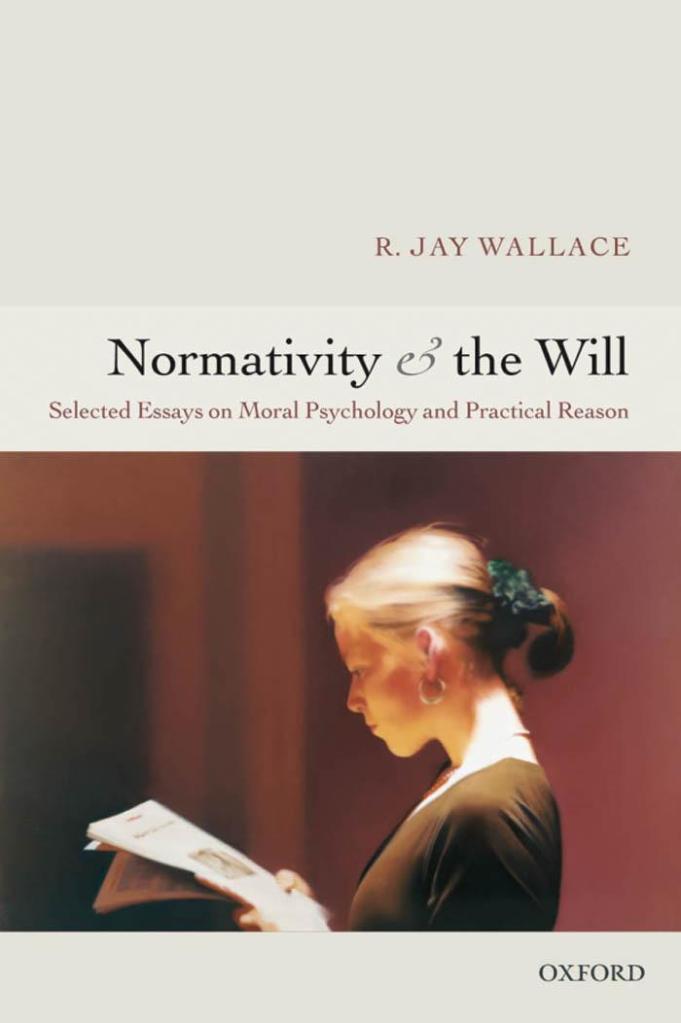
Normativity and the Will by R. Jay Wallace is a remarkable engagement with some of the most pressing and conceptually subtle issues at the intersection of ethical theory, moral psychology, and the theory of practical reason. In this volume, Wallace collects fourteen of his own seminal essays, each of which provides a robust philosophical framework for understanding the normative dimensions of human agency, the role of reasons and desires in guiding action, the nature of moral responsibility, the significance of emotional identification and self-governance, and the complex interplay between moral norms and other domains of normative thought. Taken together, these essays form a highly systematic, yet richly textured variety of argumentation that illuminates the deeply interconnected nature of the normative and the psychological, presenting them not as isolable realms but as spheres in continuous and philosophically fertile interaction. The result is a body of work that not only makes a case for a distinctive way of approaching questions in moral psychology and practical reason, but also advances a unified vision that aspires to reconcile the philosophical demands of normativity with the lived psychological realities of deliberating, feeling, and willing agents.
The collection addresses a wide range of philosophical themes that have preoccupied ethical theorists for decades, if not centuries: the conditions under which agents can be considered responsible for their actions, the extent to which reason and desire compete or cooperate in the formation of an agent’s will, the nature of identification with one’s motives, and the subtle emotional substrata that shape moral cognition. Throughout, Wallace engages with a variety of influential philosophical schools and thinkers—from Kantian constructivists to contemporary moral realists—probing and testing the coherence, plausibility, and explanatory power of their conceptions of moral normativity. The book does not shy away from addressing deeply contested points, as Wallace painstakingly unpacks the reasons-for-action debate, engages with the nature of moral realism and antirealism, and investigates the viability of constructivist attempts to ground normativity in the constitutive features of agency itself. Each page presses the reader to think carefully about how we understand the standards that guide action, what it means to speak of obligations that bind us, and the conditions that allow reasons to take hold of our wills.
Readers will find that Wallace’s treatment of the exchange between reason and desire offers a particularly subtle perspective on issues that have long bedeviled moral philosophy. Traditionally, these debates have pitted externalist conceptions of moral realism—that is, views that posit the existence of normative truths independent of our judgments or volitions—against constructivist approaches that seek to root normativity in the activity of rational deliberation itself. In grappling with this tension, Wallace teases apart the strands that have led philosophers such as Gilbert Harman, J. L. Mackie, Richard Boyd, David Brink, and Peter Railton to articulate various realist positions about morality’s standing in a world of independent facts. He shows that there is a crucial difference between understanding moral reality in a merely objectual sense—where we might treat moral properties as akin to peculiar external entities—and taking a more factive approach that situates normativity in truths about reasons that hold independently of our will. Wallace’s careful and learned exegesis of these positions reveals both their strengths and their vulnerabilities, and in so doing, demonstrates how the philosophical landscape is far more variegated than a simple realism-versus-constructivism dichotomy might suggest.
What emerges from these essays is an appreciation of how the concept of normativity itself must be parsed with great care. Wallace is keen to emphasize that normativity is not merely a theoretical concept capturing how we ought to act according to some external standard; it is also deeply practical, embedded in the perspective of agents who must discover, interpret, and respond to reasons. For Wallace, taking this first-personal stance seriously means resisting those forms of realism that do not adequately explain how agents, from within the domain of practical deliberation, can be guided authoritatively by the normative facts that realism posits. At the same time, Wallace’s essays subject constructivist ambitions to withering scrutiny: it is not obvious that one can “construct” all normative principles simply from the conditions of willing, nor is it evident that the complexity and heterogeneity of normative reasons can be subsumed under a single explanatory framework that makes no appeal to independent truths. He exposes a tension at the heart of constructivism: while it promises a unified source of normativity grounded solely in the nature of deliberation, its project struggles to accommodate the wide variety of reasons that agents recognize in everyday life—from considerations about moral wrongdoing and the demands of justice, to the reasons arising from personal relationships, aesthetic sensibilities, and the particular contours of one’s life projects.
In exploring the relation between morality and other normative domains, Wallace illuminates how moral reasons may or may not stand in a special or privileged position among the multitude of reasons that agents encounter. The essays highlight the significance of moral reasons as distinctively normative considerations—considerations that aspire to hold independently of an agent’s desires and interests. However, he also notes the many ways in which this distinctiveness is challenged by a more general normative pluralism, reminding us that morality does not exhaust the normative landscape. In so doing, Wallace brings clarity to complex philosophical issues: How do moral reasons differ from reasons of prudence, etiquette, or law? What is special about the demands morality places on us, and how do we justify its claim to authority in a world that also acknowledges the normativity of countless other pursuits, projects, and valuations?
Throughout the volume, Wallace’s writing displays an admirable philosophical rigor, yet it is far from dry or arid. His arguments are crafted with a sophistication that reveals underlying conceptual structures, while maintaining a careful attention to the psychological realities that animate practical deliberation. This attention to moral psychology is no mere add-on; it is central to Wallace’s philosophical method. By showing that our ordinary moral practices—practices that attribute responsibility, that demand certain forms of emotional response such as guilt or resentment, and that involve the rich interplay of identification and personal commitment—are permeated by normative considerations at every level, Wallace makes a powerful case for a method that refuses to segregate the normative from the psychological. Instead, he insists that robust philosophical understanding emerges from seeing how ethical norms are lived and experienced by agents, how they shape and are shaped by our motivations, and how reason and desire together constitute the seat of agency.
One of the critical virtues of Wallace’s essays is that they are not content to remain within a single theoretical tradition. Although deeply influenced by Kantian strains of moral philosophy, Wallace grapples extensively with anti-realist and realist theories, challenges assumptions held by proponents of both camps, and carefully considers the thought of leading figures in the field such as Nagel, Parfit, Raz, and Scanlon. From Nagel’s hint that unchosen constraints on choice may be conditions of possibility for agency, to Scanlon’s complex position that combines a realist stance about general normativity with a constructivist approach to morality narrowly defined, Wallace’s exploration shows just how contested the theoretical terrain is. He provides a guide through these philosophical thickets that is at once critical and charitable—he neither dismisses nor uncritically endorses any of these views, but rather puts them in dialogue with one another, thereby expanding the reader’s sense of what a fully integrated moral psychology and theory of practical reason might look like.
In light of these engagements, one can better understand the high praise that the book has elicited. As noted in the review from Notre Dame Philosophical Reviews, Wallace’s essays contribute as much to ethical theory as to theories of motivation, responsibility, and autonomy, shedding light on some of the most significant accounts of practical rationality in recent decades. The review’s characterization of the work as one of the best achievements in moral philosophy of the new century is a testament to its depth, rigor, and the way it positions itself at the very center of contemporary debates. The essays collected here are indispensable reading for philosophers seeking clarity about how moral demands interact with human agency, how responsibility is anchored in normative practices, and how reasons might be understood as sources of genuine guidance rather than inert theoretical constructs. Wallace’s arguments will remain of lasting importance to those who wish to understand how philosophical reflection on normativity can be informed by, and conversely inform, our understanding of the will, desire, and the psychological underpinnings of moral life.
The new introduction that Wallace provides for the volume further enhances its value, as it locates the essays in their broader intellectual context and articulates the underlying unity that runs through them. Without succumbing to a linear or simplistic narrative, Wallace uses the introduction to show how the essays, taken as a whole, constitute an invitation to pursue moral philosophy in a way that fully acknowledges the complexity of human psychology and the multifaceted character of normative concepts. The author’s presence at the University of California, Berkeley situates him at a premier institution for philosophical inquiry, and his accomplished career and influence in contemporary moral philosophy ensure that this volume will appeal to both established scholars and those new to the field, offering a kind of philosophical road map through some of the most challenging and rewarding terrain that moral thought has to offer.
In the pages of Normativity and the Will, the reader will encounter not a neat system or a reductive formula, but a challenging and illuminating dialogue with some of the most fundamental questions of moral philosophy. These essays are replete with searching reflections on the nature of moral facts, the independence or constructedness of normativity, the authority with which moral claims address us, and the complex psychological conditions that make such normativity intelligible and compelling. Wallace’s insistence that normativity must be understood in connection with the embodied, emotional, practical life of human agents stands as a challenge to any view that seeks to drain the moral realm of its lived significance or to treat it as a purely theoretical artifact.
For anyone interested in how moral psychology, responsibility, desire, emotion, and the structure of agency can be brought into constructive conversation with normative ethics and the theory of practical reason, Wallace’s volume will serve as an invaluable resource. Its philosophical density, analytic precision, and openness to multiple perspectives ensure that it rewards careful and repeated readings. Normativity and the Will is not some book on stable orthodoxy, rather, it provides a set of philosophical tools and conceptual frameworks by which readers can clarify their own positions, refine their intuitions, and contribute to an ongoing philosophical enterprise that seeks to understand what it means to be guided by reasons, to feel the force of moral demands, and to recognize that normativity itself, though perhaps multifaceted and heterogeneous, remains central to the very idea of a thoughtful, reflective, and genuinely human life.
 Simon Gros
Leave a comment