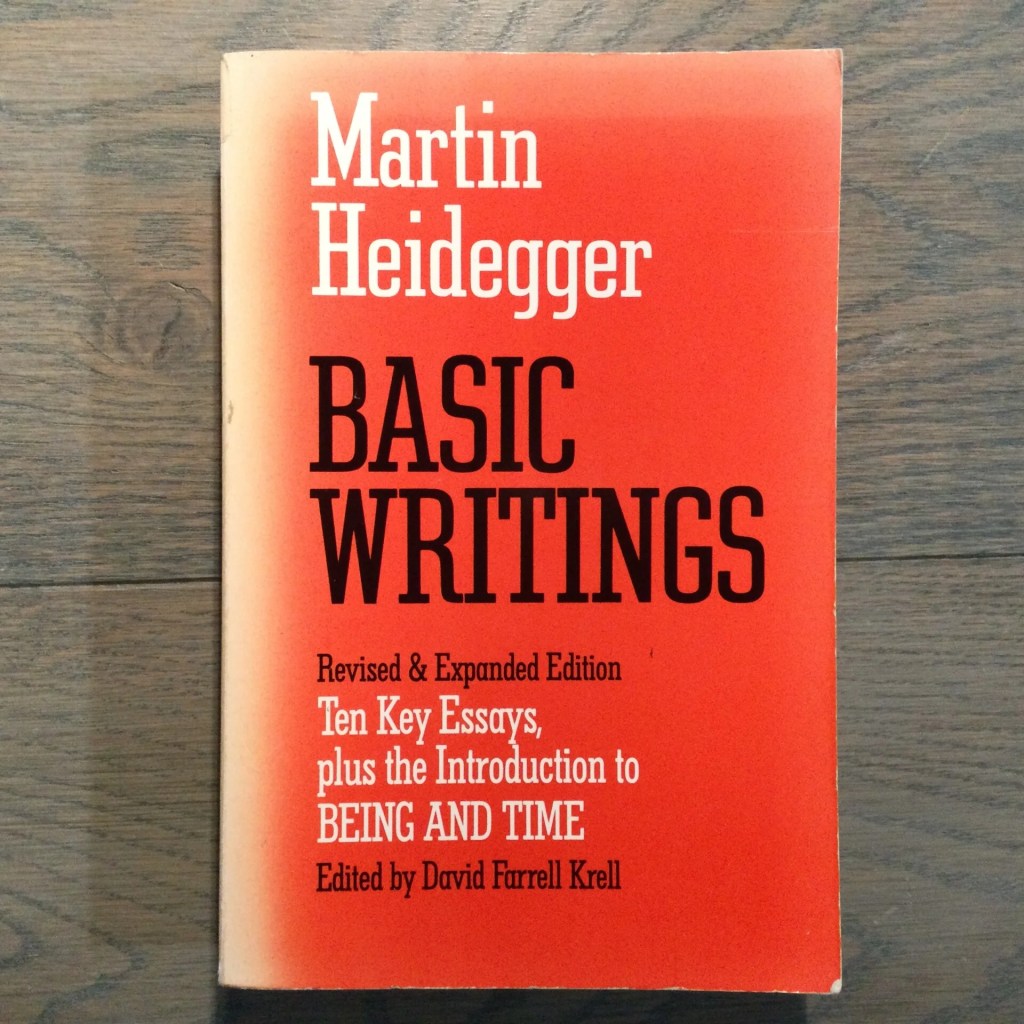
Martin Heidegger: Basic Writings is an indispensable compendium that encapsulates the depth and breadth of one of the most influential philosophers of the 20th century. This anthology brings together Heidegger’s seminal works, offering readers an immersive journey into his groundbreaking exploration of the fundamental questions of existence, Being, and the human condition. The collection not only serves as an introduction to Heidegger’s complex thought but also provides a comprehensive overview that is both dense and richly detailed, reflecting the scope of his philosophy.
At the heart of Heidegger’s philosophy lies the question of Being, a pursuit that seeks to uncover the meaning and nature of existence itself. This anthology opens with the introduction to Being and Time, a work heralded by Richard Rorty as having “changed the course of philosophy.” In this pivotal text, Heidegger goes into the concept of Dasein, a term he uses to describe human existence in its most authentic form. Dasein is not merely a being among other beings but is characterized by its capacity for self-awareness and its inherent concern with its own Being. Heidegger argues that traditional metaphysics has neglected this fundamental aspect, leading to a superficial understanding of existence.
Heidegger’s analysis of Dasein reveals that human beings are unique in their ability to question their own existence, to reflect upon the nature of Being itself. This reflexive quality sets Dasein apart and serves as the starting point for Heidegger’s phenomenological method. By examining the structures of experience from the first-person perspective, he seeks to uncover the pre-theoretical understanding of Being that underlies all human activity. This method allows Heidegger to move beyond the abstractions of traditional ontology and to engage with the concrete realities of human existence.
In What Is Metaphysics?, Heidegger confronts the limitations of scientific and metaphysical inquiry in grasping the essence of Being. He introduces the concept of the “nothing,” which is not a mere negation or absence but an integral aspect of existence that reveals the finitude and temporality of Dasein. This confrontation with the nothing leads to an authentic encounter with the fundamental moods of anxiety and angst, through which Dasein becomes aware of its own potentiality-for-Being. Heidegger’s analysis here challenges the conventional dichotomies of being and non-being, pushing the boundaries of metaphysical thought.
The Origin of the Work of Art extends Heidegger’s philosophy into the realm of aesthetics, where he examines how art reveals truths about Being that remain inaccessible through other means. He posits that art is not merely a representation of reality but a dynamic process that brings forth the essence of things. The artwork becomes a site where the tension between world and earth unfolds, revealing the historical and cultural dimensions of existence. This exploration underscores the transformative power of art in disclosing the hidden dimensions of Being and shaping human understanding.
In the Letter on Humanism, Heidegger responds to the existentialist interpretations of his work, particularly those of Jean-Paul Sartre. He clarifies his departure from humanism, arguing that traditional humanism remains entangled in metaphysical concepts that obscure the true nature of Being. Heidegger emphasizes the need to return to the question of Being itself, free from anthropocentric biases. This involves a radical rethinking of language, thought, and the relationship between humans and their world. By critiquing the limitations of humanism, Heidegger opens a path toward a more profound engagement with existence.
The Question Concerning Technology addresses the pervasive influence of technology on modern life and its implications for human existence. Heidegger does not merely critique technological advancements but seeks to uncover the essence of technology as a mode of revealing. He introduces the concept of Gestell, or enframing, which denotes the way technology orders and controls the world, reducing it to a standing reserve of resources. This technological mindset obscures the true nature of Being and diminishes the possibilities for authentic human engagement with the world. Heidegger calls for a reorientation that recognizes the dangers of enframing and embraces a more poetic and mindful relationship with existence.
The Way to Language goes into the fundamental role of language in shaping human experience and understanding. Heidegger argues that language is not merely a tool for communication but the house of Being, wherein existence unfolds and becomes articulate. Through language, the world is disclosed, and Dasein’s relationship to Being is mediated. Heidegger explores the limitations of conventional linguistic structures and seeks a more originary way of speaking that remains attuned to the mystery and openness of Being. This involves a poetic approach to language that can capture the nuances of existence beyond the constraints of logic and grammar.
In The End of Philosophy, Heidegger reflects on the historical trajectory of Western thought and its culmination in the technological age. He suggests that philosophy, as traditionally conceived, has reached its limits and can no longer address the pressing questions of Being. This end is not merely a termination but a transformation, signaling the need for a new way of thinking that moves beyond metaphysics. Heidegger envisions a shift toward a meditative thinking that remains open to the call of Being and resists the calculative tendencies of modernity. This transition requires a fundamental reexamination of the foundations of thought and a willingness to embrace uncertainty and ambiguity.
Throughout Basic Writings, Heidegger consistently challenges readers to question their assumptions and to engage deeply with the fundamental issues of existence. His dense prose reflects the complexity of the ideas he grapples with, requiring careful and attentive reading. The anthology, curated with a new introduction by Taylor Carman, provides valuable context and guidance for navigating Heidegger’s thought. Carman’s insights help to illuminate the nuances of Heidegger’s philosophy and to situate his work within the broader landscape of contemporary thought.
Heidegger’s influence extends across numerous disciplines, including philosophy, theology, literary theory, and environmental studies. His questioning of traditional metaphysics and his emphasis on the situatedness of human existence have inspired generations of thinkers to explore new avenues of inquiry. The anthology captures this multifaceted impact, showcasing the diversity of Heidegger’s thought and its relevance to a wide range of philosophical concerns.
Martin Heidegger: Basic Writings is not merely a collection of essays but a cohesive exploration of themes that are central to understanding the human condition. The texts collectively address the areas of Being, time, language, art, technology, and history, revealing the interconnectedness of these domains. Heidegger’s emphasis on temporality, for instance, underscores the finite and transient nature of human existence. Time is not a mere sequence of moments but the horizon within which Dasein projects itself and encounters the world. This temporal dimension is crucial for understanding notions of authenticity, freedom, and possibility.
Heidegger’s analysis also foregrounds the concept of thrownness (Geworfenheit), which describes the condition of Dasein as being thrown into a world not of its own making. This highlights the inherent limitations and contingencies that shape human existence. Yet, within this thrownness lies the potential for authenticity, as Dasein can choose to embrace its possibilities and to live in accordance with its ownmost potentiality-for-Being. This requires confronting the existential anxiety that arises from the awareness of mortality and the nothingness that underlies existence.
The anthology also explores the idea of being-in-the-world, a fundamental structure of Dasein that emphasizes the inseparability of the individual from their environment. Heidegger rejects the Cartesian dualism of subject and object, proposing instead that humans are always already embedded in a meaningful world. This ontological condition shapes perceptions, actions, and relations with others. The concept of Mitsein, or being-with-others, underscores the social dimension of existence, highlighting the ways in which Dasein’s understanding of itself is mediated through its interactions with others.
Heidegger’s reflections on technology and art also offer profound insights into the contemporary human experience. His critique of the technological worldview anticipates many of the concerns of the modern age, such as environmental degradation, alienation, and the loss of meaningful connections. By contrast, his appreciation of art as a mode of revealing offers a potential avenue for reconnecting with the essence of Being. Art becomes a space where truth happens, where the concealed aspects of existence are brought into the open.
Language, for Heidegger, is both a medium and a manifestation of Being. His exploration of poetic language seeks to move beyond the limitations of everyday speech, which often obscures rather than reveals. Poetry, in its attentiveness to the unsaid and the unsayable, opens up possibilities for experiencing the world anew. This attentiveness requires a shift from a representational to a hermeneutic approach, where understanding is always interpretative and situated within a historical context.
Basic Writings is thus a vital resource for anyone seeking to engage with Heidegger’s challenging philosophy. The anthology provides a thorough presentation of his key ideas, allowing readers to grapple with the complexities of his thought. Heidegger’s work demands active participation, inviting readers to question their own assumptions and to reflect deeply on the nature of existence.
In bringing together these essential texts, the anthology highlights the continuity and development of Heidegger’s thought over time. It showcases his persistent engagement with the question of Being and his efforts to unravel the layers of meaning that constitute human existence. The collection underscores the relevance of Heidegger’s philosophy to contemporary issues, from the existential dilemmas of modern life to the philosophical underpinnings of technology and art.
Martin Heidegger: Basic Writings goes beyond a mere introduction, it’s a comprehensive immersion into the philosophical landscape that Heidegger navigated. The anthology demands rigorous attention and offers rich rewards for those willing to delve into its depths. It shows Heidegger’s enduring influence and the transformative power of his ideas. As the New York Times aptly notes, he remains “one of the most profound thinkers of the 20th century,” and this collection offers a gateway into the vast and intricate world of his philosophy.
 Simon Gros
Leave a comment