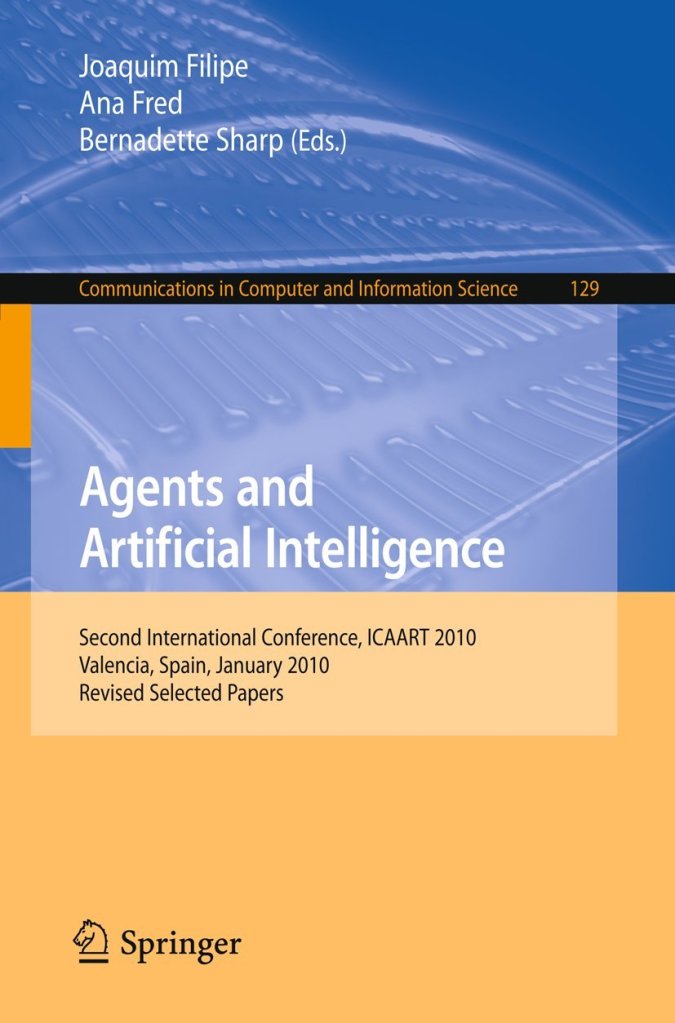

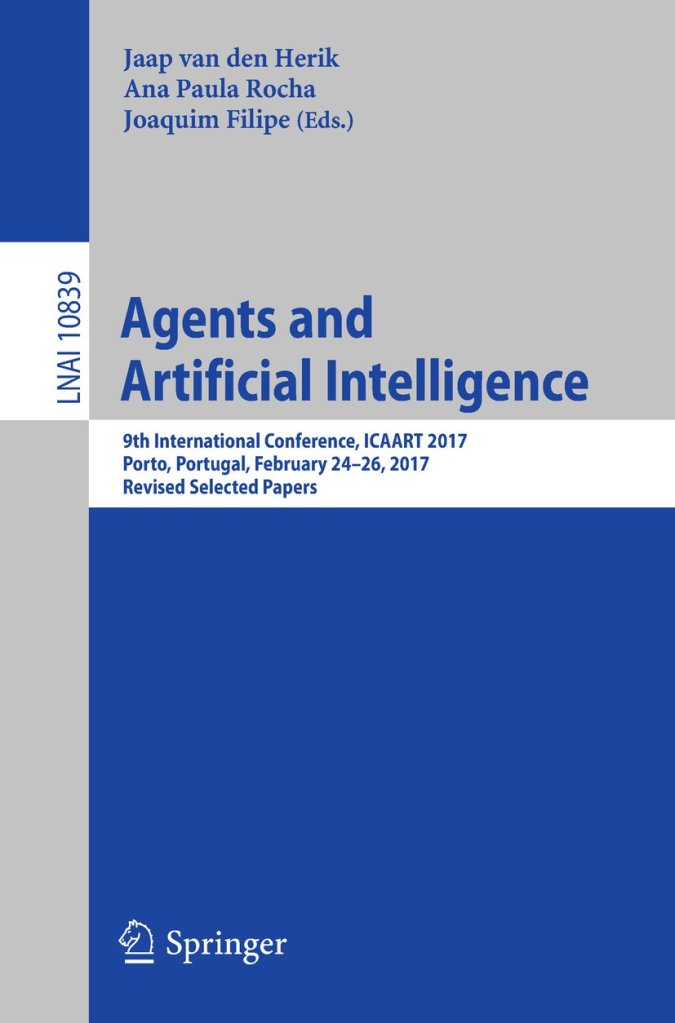
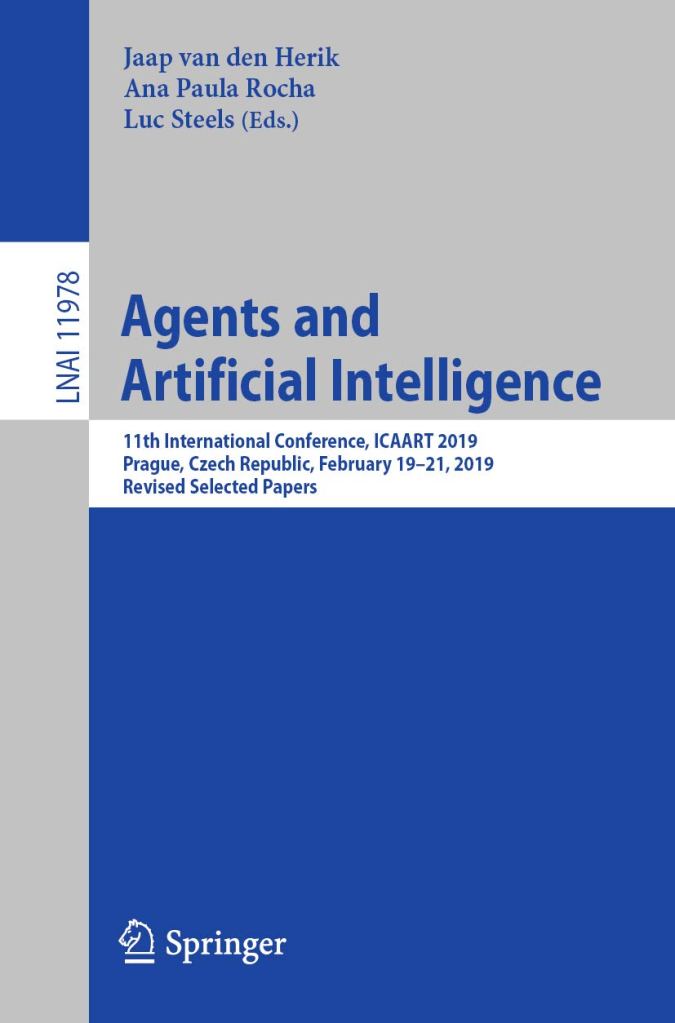
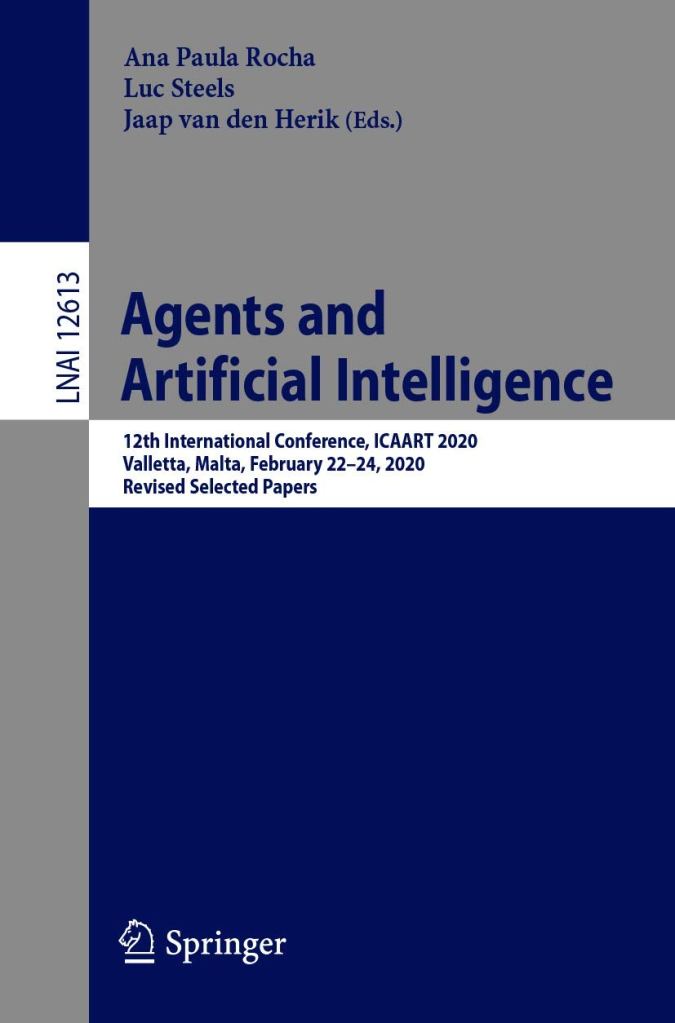
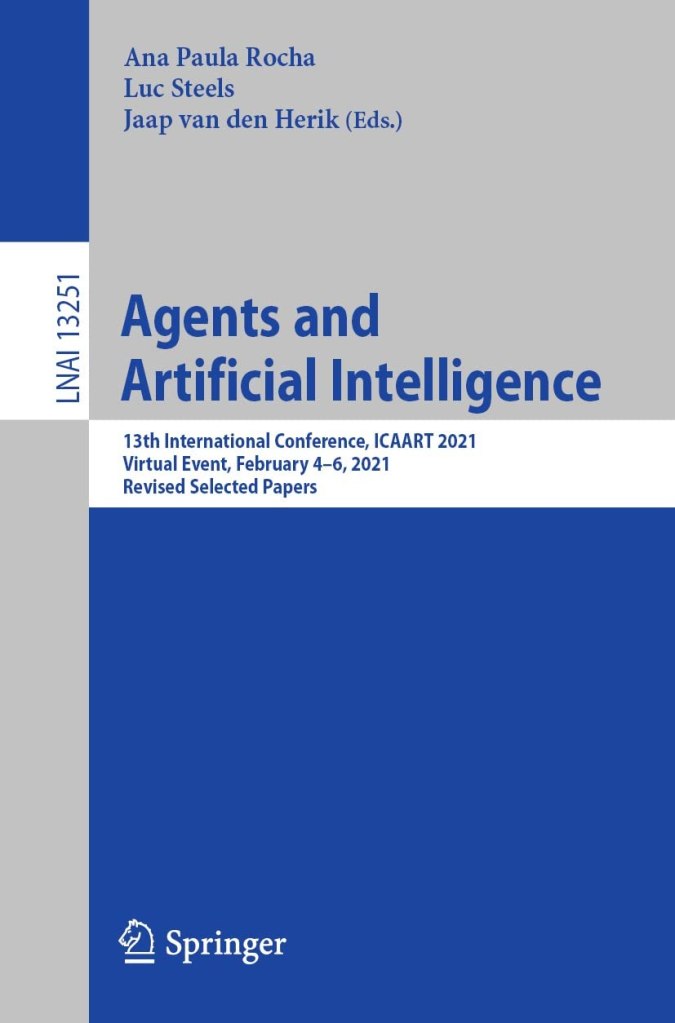
Agents and Artificial Intelligence is an extensive compendium that encapsulates over a decade of pioneering research and philosophical inquiry into the realms of artificial intelligence and agent-based systems. Spanning 13 volumes derived from the International Conference on Agents and Artificial Intelligence (ICAART) held annually from 2009 to 2021, this collection represents a curation of the most impactful and forward-thinking papers presented by scholars and practitioners from around the globe.
The series begins with insights from the inaugural conference in Porto, Portugal, in 2009, where the foundational tracks of “Artificial Intelligence” and “Agents” were established. The conference set a high scholarly standard, accepting only a fraction of submissions after a rigorous blind review process. This tradition of excellence continued throughout the subsequent conferences, each held in diverse locations such as Valencia, Rome, Vilamoura, Barcelona, Angers, Lisbon, Funchal, Prague, Valletta, and culminating in a virtual event in 2021 due to global circumstances.
Throughout these volumes, one can observe the evolution of artificial intelligence and agent-based research, reflecting interdisciplinary approaches and technological advancements. The diversity of topics covered is vast, enabling readers to perceive significant scientific and technological trends that have shaped the current landscape of AI and agents. The collected works delve into multi-agent systems, software platforms, distributed problem-solving, knowledge representation, planning, learning, scheduling, perception, reactive AI systems, evolutionary computing, and other facets of computational intelligence.
The series not only presents theoretical frameworks but also practical applications and case studies. For instance, the exploration of social learning in adolescence-limited criminal behavior offers a dynamical agent-based approach to simulate and analyze the emergence of such behavior through peer interaction. This study showcases how artificial societies can model complex social phenomena, providing valuable insights that are difficult to obtain through real-world experimentation due to ethical and logistical constraints.
Another significant contribution is the development of a powerful XML-based framework for intelligent data analysis. By proposing a new query language for XML Data Mining, researchers address the challenges posed by the proliferation of semi-structured data and the limitations of relational databases. This work underscores the importance of flexible data representation and the integration of mining systems with native XML databases, facilitating more efficient querying and manipulation of both data and extracted models.
The collection also goes into the utilization of game-theoretic principles to elicit truthful information from agents. By examining scoring rules, peer prediction methods, and opinion polls, the research highlights mechanisms that incentivize honest reporting, which is crucial in scenarios where agents may have self-interested motives. Such mechanisms have practical implications for online reputation systems, sensor networks, and information aggregation platforms.
Furthermore, the volumes explore coordination methodologies in multi-robot systems, for example within the context of robotic soccer. The research presents methodologies for strategic reasoning, coaching, strategic positioning, dynamic role exchange, and flexible setplay definition and execution. These contributions are not merely theoretical but have been integrated into teams that have achieved considerable success in various RoboCup leagues and competitions. The work illustrates how coordination frameworks enable robotic teams to perform complex tasks, emphasizing the intersection of artificial intelligence, robotics, and real-time decision-making.
Throughout the series, the inclusion of plenary keynote lectures by distinguished researchers adds depth and perspective to the collected works. Scholars such as Juan Carlos Augusto, Marco Dorigo, Timo Honkela, Edward H. Shortliffe, Paulo Urbano, Yves Demazeau, Tim Finin, Vicent J. Botti i Navarro, Peter D. Karp, Amílcar Cardoso, Cristiano Castelfranchi, Boi Faltings, Didier Dubois, Mark Klein, Klaus Fischer, Anthony G. Cohn, Frank Dignum, Luís Paulo Reis, and Wolfgang Wahlster have contributed their expertise, enriching the discourse and inspiring further exploration within the field.
The selection process for the papers included in these volumes ensures that only high-quality research is presented. Each conference received hundreds of submissions from numerous countries, yet only a select few were accepted after thorough peer review. This rigorous curation highlights the commitment to advancing the field by presenting innovative and impactful research.
In addition to the technical and theoretical advancements, the series emphasizes the importance of collaboration and the collective effort required to drive progress in artificial intelligence and agent-based systems. The conferences brought together authors, program committee members, and organizing committees, whose combined expertise and diligence made these gatherings and the subsequent publications possible. The acknowledgment of their contributions underscores the collaborative nature of scientific inquiry and the advancement of technology.
Agents and Artificial Intelligence is a comprehensive reference for researchers, practitioners, and students interested in the current state and future directions of AI and agent-based systems. The series encapsulates significant developments over a critical period marked by rapid technological change and increasing interdisciplinary integration. It offers readers not only a wealth of knowledge on specific topics but also a broader understanding of how various aspects of artificial intelligence and agent systems converge and influence each other.
The philosophical underpinnings of the research presented in these volumes encourage readers to contemplate the ethical, societal, and existential implications of artificial intelligence. As AI systems become more integrated into daily life, considerations of how they learn, make decisions, and interact with humans become increasingly important. The works included prompt critical reflection on these issues, fostering a dialogue that extends beyond technical specifications and algorithms.
The Agents and Artificial Intelligence series is a testament to the dynamic and evolving nature of the field. It captures a snapshot of over a decade of scholarly activity, reflecting both the challenges faced and the solutions proposed by the AI community. The volumes stand as a valuable resource, offering dense, detailed, and accurate accounts of research that has significantly contributed to the advancement of artificial intelligence and agent-based systems. They invite readers to engage deeply with the material, to consider the broader implications of the work, and to contribute to the ongoing discourse that will shape the future of the field.
 Simon Gros
Leave a comment