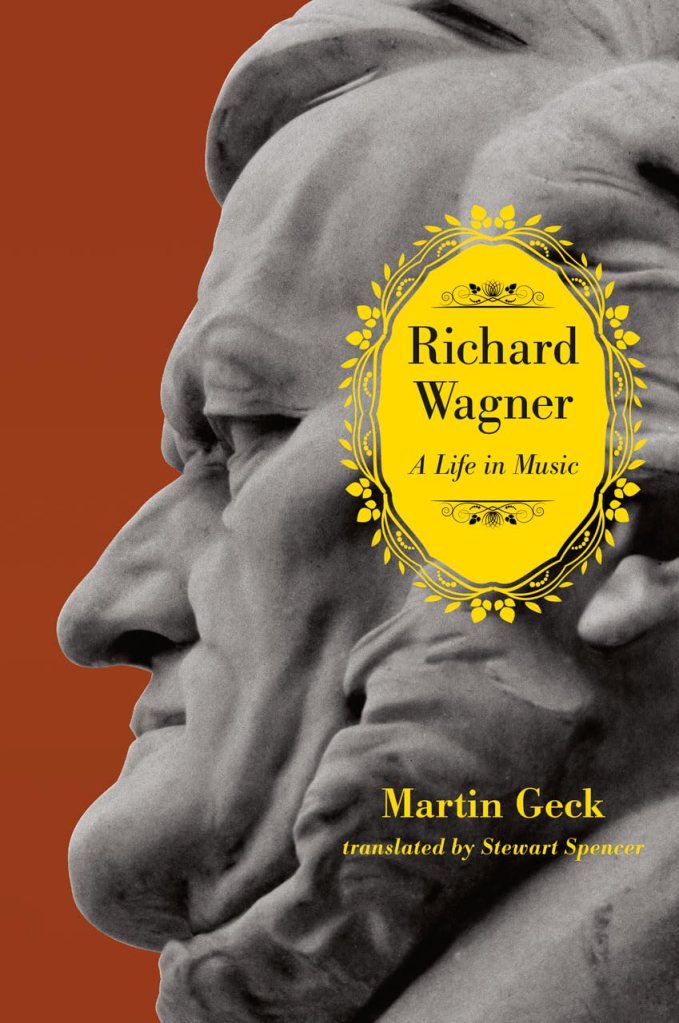
Richard Wagner: A Life in Music by Martin Geck, masterfully translated by Stewart Spencer, presents the analysis of one of music history’s most enigmatic and influential figures. This comprehensive biography transcends the conventional narrative, engaging the multifaceted persona of Richard Wagner—composer, conductor, librettist, theater director, and essayist. Geck’s work doesn’t just recount Wagner’s life events but goes directly into the very essence of his artistic and philosophical contributions.
The biography makes an examination of Wagner’s revolutionary approach to music and drama. Geck presents the composer’s major operas, including The Flying Dutchman, Tannhäuser, Tristan und Isolde, and the monumental four-opera cycle The Ring of the Nibelung. By situating these works within the broader context of 19th-century aesthetics, Geck illuminates Wagner’s quest for the Gesamtkunstwerk—a total artwork synthesizing music, poetry, and stagecraft. This concept not only redefined opera but also left an indelible mark on subsequent developments in European art and philosophy.
Geck’s biography is distinguished by its dual focus on Wagner’s musical innovations and his complex engagement with contemporary intellectual currents. The narrative presents Wagner’s ideas on politics, culture, and society, revealing a thinker deeply engaged with the tumultuous currents of his time. Wagner’s writings on art and revolution, his flirtations with anarchism, and his contentious views on nationalism and identity are all scrutinized with scholarly rigor. Geck does not shy away from the more problematic aspects of Wagner’s legacy, including his notorious anti-Semitism and the appropriation of his ideas by later political movements. Instead, he confronts these issues head-on, offering an analysis that acknowledges both Wagner’s genius and his moral failings.
One of the biography’s most compelling features is its exploration of the dialectical tensions in Wagner’s life and work. Geck portrays Wagner as a figure perpetually caught between opposing forces: the revolutionary and the reactionary, the idealist and the pragmatist, the artist and the propagandist. This internal conflict is mirrored in Wagner’s music, where themes of love and redemption are often entangled with motifs of destruction and self-annihilation. Geck’s analysis of these themes is both dense and insightful, drawing connections between Wagner’s personal experiences, his philosophical readings—particularly of Schopenhauer and Nietzsche—and his artistic output.
Geck also goes into the psychological underpinnings of Wagner’s creativity. The biography examines the composer’s childhood experiences, marked by familial instability and a fervent immersion in the theatrical world. These formative years, Geck suggests, seeded the archetypal scenes of love, betrayal, and redemption that recur throughout Wagner’s operas. By tracing the evolution of these motifs from Wagner’s early works like Die Feen to his later masterpieces, Geck highlights the consistency of Wagner’s artistic vision and his relentless pursuit of an idealized form of expression.
The biography is enriched by Geck’s deep engagement with Wagner’s own writings and correspondence. By including excerpts from letters, diaries, and theoretical essays, Geck allows Wagner’s voice to resonate within the narrative, providing firsthand insight into his thoughts and motivations. This approach lends authenticity to the biography while also illustrating the challenges inherent in interpreting Wagner’s self-mythologizing tendencies. Geck remains critically aware of the limitations of these sources, acknowledging the often unreliable nature of personal recollections and the selective memory that colors autobiographical accounts.
In addressing Wagner’s pervasive influence on subsequent generations, Geck expands the scope of the biography beyond the confines of the 19th century. He explores how Wagner’s ideas permeated various domains, from philosophy and literature to theater staging and the visual arts. The biography examines the complex reception of Wagner’s work, tracing how his music and ideas have been variously celebrated, appropriated, and vilified. Geck’s treatment of this legacy is balanced and comprehensive, acknowledging the impact of Wagner’s art while critically assessing the darker aspects of his ideology.
A noteworthy aspect of Geck’s biography is its treatment of Wagner’s anti-Semitism and its ramifications. Rather than relegating this issue to a footnote, Geck incorporates it into the central narrative, offering a series of contrapuntal chapters that examine key Jewish figures in Wagner’s life and the broader reception of his work within Jewish communities. This innovative approach provides a constructive framework for grappling with one of the most vexed elements of Wagner’s legacy, encouraging readers to confront the ethical complexities head-on.
Stewart Spencer’s translation deserves special mention for its clarity and elegance. Spencer captures the nuance of Geck’s prose, rendering complex ideas accessible without sacrificing intellectual depth. The translation facilitates a seamless reading experience, allowing the intricate layers of Geck’s analysis to unfold naturally.
Richard Wagner: A Life in Music is a landmark study, offering both scholars and enthusiasts a rich and multifaceted portrait of the composer. Geck’s biography transcends the boundaries of traditional musicology, intersecting with disciplines such as philosophy, cultural history, and psychology. The work invites readers to engage critically with Wagner’s art and its enduring significance, prompting reflections on the role of the artist in society and the interplay between creative genius and moral responsibility.
Martin Geck’s biography is a tour de force that captures the enigmatic spirit of Richard Wagner. It is a work that balances admiration with critical scrutiny, providing a comprehensive understanding of a composer who has shaped the course of Western music and thought. Geck succeeds not only in illuminating Wagner’s life and works but also in exploring the enduring questions that they raise about art, identity, and the human condition. This biography is an indispensable resource for anyone seeking to comprehend the complexities of Wagner’s legacy and his place within the broader variety of cultural history.
 Simon Gros
Leave a comment