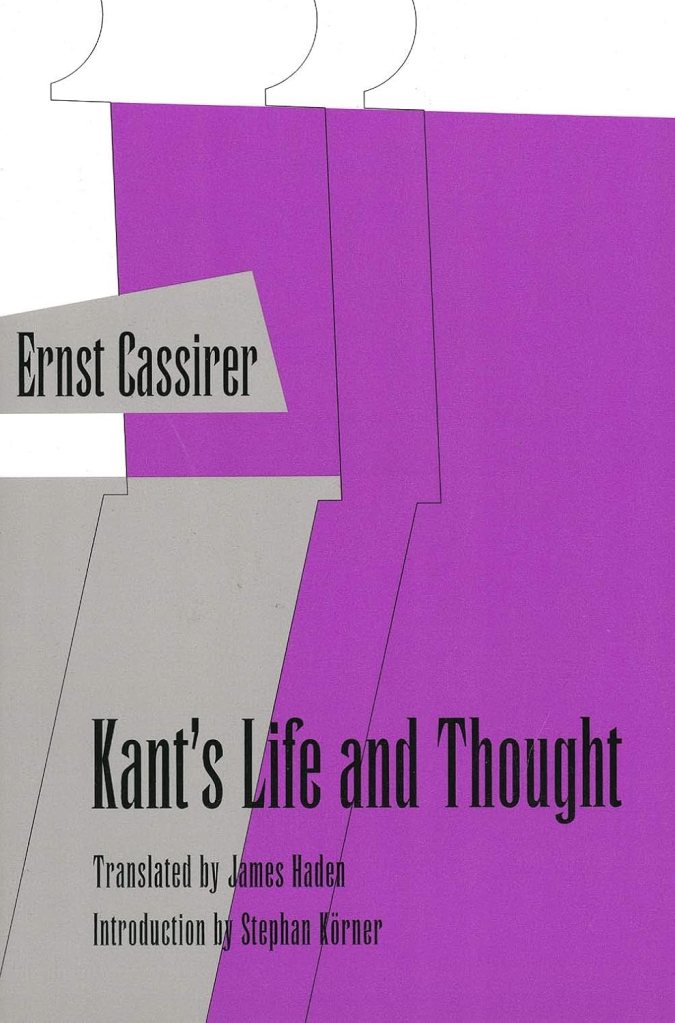
Ernst Cassirer’s Kant’s Life and Thought, a seminal philosophical biography and intellectual exploration, bridges a deep understanding of Immanuel Kant’s life with a rigorous analysis of his works. For Cassirer, Kant is not merely a philosopher to be studied but a foundational figure whose ideas mark a historical inflection point in philosophy. In writing this text, Cassirer engages not only in a historical recounting of Kant’s intellectual journey but also in a deep self-reflective exercise. Cassirer himself, as a member of the neo-Kantian Marburg School, owed much of his own philosophical development to Kant’s transcendental idealism, and this work thus represents his attempt to both interpret and extend Kant’s thought. Through a careful examination of Kant’s pre-critical writings and later masterpieces—the three Critiques—Cassirer constructs a view of Kant not simply as an innovator in epistemology and metaphysics but as a systematizer of human knowledge whose ideas continue to shape diverse fields, from science and ethics to aesthetics and beyond.
Cassirer approaches Kant’s philosophy by contextualizing it within the broader intellectual currents of his time, particularly the Enlightenment’s shift from metaphysical ontology to epistemology. Kant’s revolutionary turn to the “critical method” aimed to set firm boundaries and capacities for human knowledge, distinguishing what can be known empirically from what is known a priori through rational principles. Cassirer deftly explicates Kant’s method of distinguishing between “questions of fact” (quid facti) and “questions of legality” (quid juris), revealing Kant’s philosophical innovation: rather than taking knowledge as a given, Kant sought to justify it, investigating the conditions that make objective experience possible. Cassirer’s account illuminates how Kant argues that the mind actively imposes a priori structures on sensory data, transforming chaotic sensations into coherent perceptions of objects. This insight underpins Kant’s Critique of Pure Reason, which Cassirer interprets as Kant’s foundational work on theoretical reason, where he rigorously defends the existence and necessity of synthetic a priori judgments—those which inform the fields of mathematics and Newtonian physics and serve as the core of objective experience.
Cassirer’s analysis extends beyond Kant’s early and most widely studied contributions to epistemology. For Cassirer, Kant’s later Critiques—The Critique of Practical Reason and The Critique of Judgment—are far more than mere appendices or extensions of his earlier work. In The Critique of Practical Reason, Kant delineates a realm of moral autonomy where rational beings are governed not by empirical desires but by the dictates of reason, which determines the moral law. Cassirer demonstrates how Kant’s ethical framework grounds morality in universal rational principles rather than contingent cultural norms or subjective inclinations, proposing that freedom itself is realized through the exercise of duty. Kant’s ethical a priori, then, is an imposition of structure and order onto the moral world, analogous to how the Categories function within theoretical knowledge. Cassirer explains how this perspective influenced his own views on human action and culture as rational enterprises that, while influenced by history and circumstance, embody an ongoing search for universal principles.
Cassirer reveals the often-overlooked profundity of Kant’s Critique of Judgment, arguing that it is here that Kant’s full philosophical project comes into focus. Traditionally dismissed as Kant’s attempt to complete a symmetrical philosophical architectonic, Cassirer emphasizes the Third Critique’s insight into aesthetics and teleology as crucial to understanding the synthesis of reason and imagination. Cassirer’s interpretation suggests that Kant saw beauty as an a priori form of subjectivity that binds individuals to one another, resonating with the transcendental ideals that underlie all rational and perceptive acts. In linking the beautiful with the moral, Kant posits an aesthetic sensibility that transcends mere pleasure, presenting beauty as a universal human experience, shaping how we interpret and find meaning in the world. Cassirer argues that in aesthetic judgment, we see an integrative capacity of the mind, uniting the empirical and the moral in a shared understanding of purpose.
In light of Cassirer’s Kant’s Life and Thought, Kantian philosophy emerges as an adaptable framework with pluralistic possibilities. As Cassirer contends, Kant’s insistence on the unique, universal validity of his Categories and synthetic a priori judgments reflects an absolutist stance suited to his historical moment—a Newtonian worldview based on absolutes of space, time, and causality. However, Cassirer, inspired by developments in mathematics and science, including the emergence of non-Euclidean geometries and quantum mechanics, envisions a more flexible system. Cassirer’s philosophy of symbolic forms extends the Kantian framework by recognizing the diverse ways in which human beings construct meaning. For Cassirer, categories are not rigid truths but symbolic forms created by human cognition, serving as tools through which different cultures, disciplines, and eras interpret the world. In this pluralistic model, there is no single, eternal framework for knowledge; rather, there are multiple “worlds,” each structured according to its own symbolic forms—whether in art, science, religion, or language.
Cassirer’s biographical approach further illuminates Kant as a deeply committed individual who lived out his philosophy through the rigor and austerity of his daily life. Kant’s insistence on reason’s primacy and his relentless commitment to a critical method were not merely intellectual stances but reflections of his personal ethic. Cassirer’s portrayal resonates with Goethe’s view that philosophical truths are inseparable from the personalities who articulate them, and it underscores Kant’s influence on Cassirer’s own intellectual ethos. For Cassirer, the task of the philosopher is not merely abstract theorization but an active engagement in shaping culture and history through rigorous critique and reflection. He regards Kant’s philosophy as one of the crowning achievements of Enlightenment thought—a synthesis of reason and critique that asserts human autonomy and dignity against the backdrop of historical contingency and social conventions.
Kant’s Life and Thought is more than a philosophical biography, it is a dialogic work wherein Cassirer revisits Kant’s ideas in light of contemporary intellectual developments. The text exemplifies Cassirer’s historical methodology, which treats ideas as dynamic forces shaped by and shaping cultural contexts. In his eyes, the history of philosophy is a progressive endeavor, moving from Descartes’ mechanistic rationalism to Kant’s critical epistemology, and ultimately toward Cassirer’s own cultural philosophy of symbolic forms. This trajectory signals a shift from understanding human knowledge solely as a cognitive phenomenon to conceiving it as a cultural process that encompasses all human symbolic activity.
With James Haden’s translation, English-speaking readers are offered a window into Cassirer’s exhaustive and yet accessible exposition of Kant. The translation preserves Cassirer’s prose, balancing philosophical precision with a readability that renders Kant’s complex ideas intelligible to a modern audience. Stephen Körner’s introduction provides additional context, situating Cassirer’s interpretation within the broader landscape of 20th-century Kantian scholarship, elucidating the work’s unique position within neo-Kantianism and its ongoing relevance.
Cassirer’s Kant’s Life and Thought is essential reading not only for those interested in Kantian philosophy but for anyone seeking to understand the modern intellectual landscape. It offers both an intimate portrait of Kant as an individual and an expansive view of his philosophical legacy. Cassirer’s work underscores that Kant’s philosophy, rather than being confined to the past, remains a living tradition—one that continues to inspire new inquiries into the nature of reason, morality, and human culture. Through Cassirer’s eyes, we see Kant not merely as a figure of historical interest but as a thinker whose ideas remain as provocative and vital as ever, challenging us to reconsider the foundations of our own understanding and the roles of philosophy and culture in human life.
 Simon Gros
Leave a comment