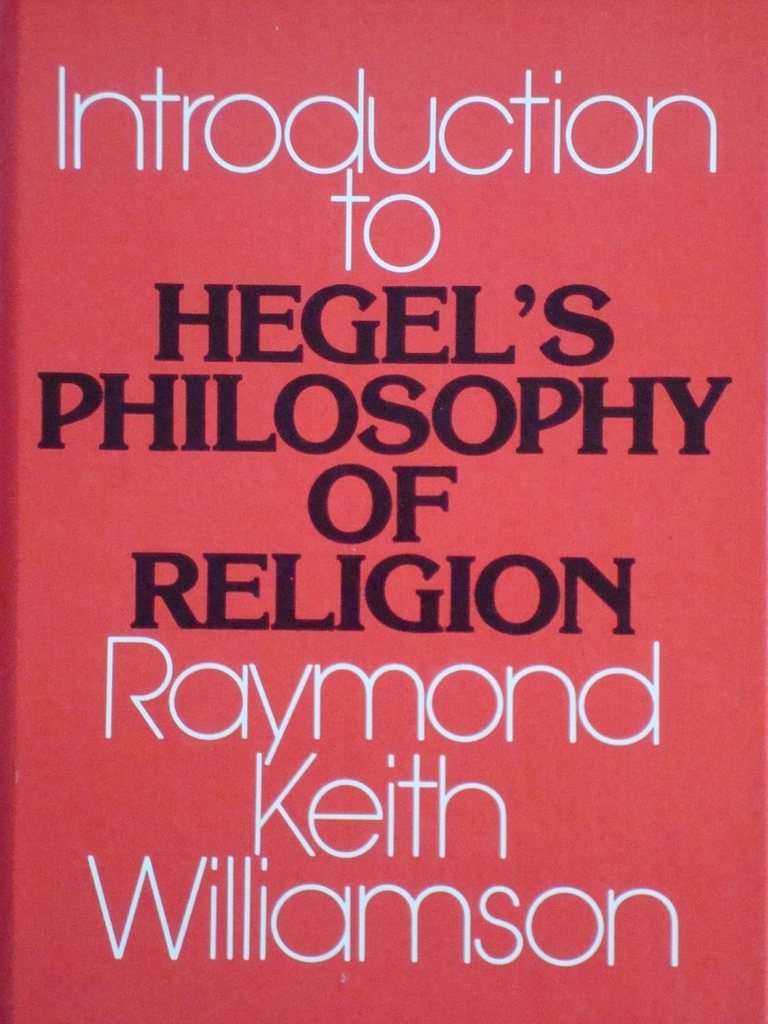
Raymond K. Williamson’s Introduction to Hegel’s Philosophy of Religion delivers an in-depth exploration of how Hegel’s unique conception of religion intertwines with his entire philosophical project, especially his doctrine of God and the notion of absolute Spirit. This work presents the complex ways in which Hegel positions religion and philosophy as sharing a singular, ultimate object—an inherent unity of all things—and yet as distinct in their modes of apprehension and expression. For Hegel, philosophy, when practiced fully, is religious, for it transcends superficial distinctions, bringing forth an understanding that unfolds in the realization of unity. In treating the essence of religion as an expression of the rational comprehension of God, Hegel reveals a theological and metaphysical vision that is both grounded in Christian tradition and yet daringly reconfigures it, raising challenging questions about the nature of faith, the structure of religious thought, and the relationship between the finite and the infinite.
In carefully analyzing Hegel’s works, Williamson traces Hegel’s complex and often contentious views on theism, atheism, pantheism, and panentheism, investigating how each term fits, misfits, or expands the philosophical and theological contours of Hegel’s God-concept. This inquiry exposes Hegel’s systematic but evolving attempt to position himself within—and simultaneously surpass—these frameworks. Through his rejection of both atheism and traditional theism, Hegel, Williamson argues, charts a middle course that recognizes God as neither an isolated transcendent being nor merely a projection of human consciousness. Instead, Hegel’s God concept represents an active, self-realizing Spirit, one that encapsulates the entirety of reality while revealing itself through the dialectical processes of nature, human consciousness, and history. Williamson rigorously confronts this middle-ground perspective, highlighting how Hegel’s doctrine resonates with, yet ultimately reshapes, key tenets of Christian theology, creating a sustained tension between religious content and philosophical structure that Hegel regarded as the foundation of genuine understanding.
This work also examines Hegel’s influences and how his context within the Enlightenment and post-Kantian thought shaped his ambitions for a religion infused with reason and an intellectual tradition that could reconcile humanity’s divided nature. The Enlightenment’s ideals of autonomy and self-determination deeply permeate Hegel’s early thought, fostering in him a deep respect for rational inquiry as a mode of religious life. Hegel’s early essays, as Williamson shows, manifest these aspirations, grappling with the rigid Lutheranism of his upbringing and the rationalistic theology of Tübingen. His dissatisfaction with these forms led him to articulate a new vision of religion as a force capable of fulfilling humanity’s desire for wholeness, one that neither rigidly clings to ecclesiastical authority nor evaporates under the scrutiny of modern reason. Religion, for Hegel, becomes a mode of speculative thought wherein God is not worshipped as an external deity but is understood as the principle of all reality, gradually realizing itself through human history and consciousness.
Williamson situates Hegel’s thought within the turbulent social and intellectual milieu of the late eighteenth and early nineteenth centuries, arguing that Hegel’s philosophical response to these conditions represents a profound attempt to synthesize the dialectics of his age. By reconciling faith and reason, finite and infinite, Hegel hoped to resolve the alienation that marked human experience and society. To this end, Williamson explores Hegel’s dialectical method, particularly as it applies to religion, and his conviction that the Christian faith, properly understood, supplies philosophy’s highest content. Hegel’s view that religion operates in a symbolic or representational mode—Vorstellungen—that is ultimately sublated (or synthesized and transcended) within philosophical thought, is central to his position on the inferiority of religious expression relative to philosophical cognition. This does not diminish religion’s importance, however, as Hegel came to philosophy largely through his engagement with Christian theology. His conviction remained that Christianity, more than any other religion, captures the dialectical nature of Spirit and provides a framework within which philosophy can develop the absolute truth.
In this deeply contextualized study, Williamson examines how Hegel’s philosophy of religion raises contentious issues regarding the status of Christianity within his system. Was Hegel’s portrayal of God and religious life so altered that it ceased to be religion in any recognizable form, especially Christianity? Williamson addresses this ambiguity, focusing on the central tension in Hegel’s thought concerning the divine-human relationship. Hegel’s ambiguous usage of terms like “God” and “Spirit” complicates the apparent middle path he sought between a strict theological theism and a secular philosophy. Williamson carefully dissects Hegel’s conception of the infinite and finite, particularly as it appears in the Phenomenology of Spirit and the Lectures on the Philosophy of Religion, to show that Hegel’s religious philosophy is neither a straightforward affirmation of Christian doctrine nor a mere philosophical abstraction. Rather, it is an attempt to sublimate religious life into a speculative system wherein God realizes self-consciousness in the world and, ultimately, in the human community.
Hegel’s conception of religion as a Volksreligion, or “people’s religion,” which aligns with the development of an integrated society, also receives careful analysis in Williamson’s account. For Hegel, religion must not only serve the personal or subjective life of believers but must also play an active role in social cohesion, establishing a basis for ethical and communal life. This concern for a religion that could speak to both the subjective yearnings of individuals and the objective needs of society shaped his opposition to the “dead” religions of his time—those which either submitted blindly to Enlightenment rationality or became isolated from the realities of human life. Williamson argues that this social dimension of Hegel’s thought on religion remains a vital and complex aspect of his philosophy. For Hegel, a transformed and “living” religion could not be purely private but had to engage dynamically with reason and historical development, reflecting the freedom and integration that he saw as necessary for both individuals and the broader society.
Throughout this exhaustive analysis, Williamson reveals the depth of Hegel’s struggle to articulate a philosophy of religion that is both theological and rational, a reflection of his desire for a unity that transcends division. Williamson’s study is thus not only a commentary on Hegel’s concept of God and religion but also a deep examination of the potential for philosophy and religion to contribute to the ongoing project of human self-understanding. Hegel’s vision of God as absolute Spirit, unfolding dialectically in the world, presents a notion of divinity not confined to traditional theological boundaries yet profoundly religious in its aspiration to comprehend the whole of reality. This work by Williamson ultimately demonstrates that Hegel’s religious philosophy offers a vision of God that challenges, enriches, and at times resists classical Christian formulations, suggesting that philosophy and theology, when genuinely pursued, are united in the search for truth.
 Simon Gros
Leave a comment