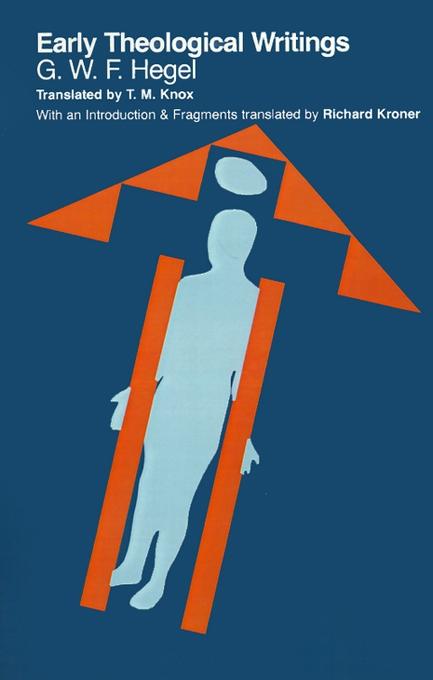
Hegel’s Early Theological Writings explores the formative years of Georg Wilhelm Friedrich Hegel’s philosophical and theological development, illuminating his transformation from a student of theology into a philosophical visionary whose ideas would eventually shape German idealism and the modern understanding of metaphysics, ethics, and religion. This volume presents Hegel’s significant early writings, penned before he articulated his mature system, revealing his complex engagement with theology, history, and the concept of folk religion. These writings do not merely trace the early inklings of Hegel’s later philosophical system but provide a rich, standalone exploration of a young mind grappling with the tension between Enlightenment rationality and Romantic emotion, between universal moral law and the particularity of individual cultural expressions of the divine.
In these writings, Hegel’s early fascination with Greek religion is a window into his vision of a “folk religion,” one that emerges from the organic life of a community, distinct from the rigid, abstract, and codified doctrines of Christianity. Hegel viewed Greek religion not merely as a belief system but as a living, breathing entity embedded in the traditions, festivals, and artistic expressions of the people. This communal, joyous, and celebratory approach to the divine contrasted sharply with what he saw as the austere, moralistic, and rationalized Christianity that dominated the spiritual life of his contemporaries. His critique of “positive” or institutionalized religion reflects his deep engagement with the Enlightenment’s emphasis on reason, yet his Romantic leanings suggest that a true understanding of the divine transcends rational confines, resonating with a universal and imaginative participation in the divine.
The volume also introduces Hegel’s early engagements with Kantian philosophy, which deeply influenced his conception of the rational structure underlying reality and his critique of religious dogma. Hegel’s essays here reveal his struggle with Kant’s ideas on moral autonomy and rational faith. Kant’s emphasis on an ethical, autonomous conscience free from historical and doctrinal constraints seemed to offer a new way of approaching the divine. In this period, Hegel even attempts a Kantian reimagining of Jesus, portraying him as a proponent of an internalized, moral religion untethered from external statutes or supernatural dogmas. Yet, for Hegel, the stark, abstract rationalism of Kant left a void, unable to encompass the richness of human spirituality and the collective cultural expression that he so admired in ancient Greece.
As Hegel’s thought evolves throughout these early works, he becomes increasingly preoccupied with the contradictions inherent in Christianity as both a historical religion and a supposed universal truth. He wrestles with how a religion purportedly founded on universal love and moral autonomy could have become, in his view, rigidly institutional and bound by external authority. This contradiction led Hegel to his concept of “positivity,” a condition where the natural, organic spiritual life of a people becomes subsumed under external commandments, doctrines, and authoritative institutions. The historical nature of Christianity, bound up with Judaic law and Roman statecraft, is contrasted unfavorably with the Greeks’ free and direct experience of the divine, which Hegel saw as less corrupted by dogmatic restrictions.
These works also reveal Hegel’s early grappling with the impact of the French Revolution, which symbolized for him both the potential and the dangers of radical change. Influenced by the revolutionary upheavals of his era, Hegel began to see that true freedom and ethical life could not be achieved simply by rejecting authority and embracing abstract notions of autonomy. His concept of freedom required not the negation of tradition but its sublation—a process by which conflicting ideals are preserved and transcended within a higher frame. Even in his youthful writings, Hegel’s dialectical method is nascent, seeking to mediate between the universal and particular, between reason and history, and between individual conscience and communal life.
Hegel’s early theological writings are permeated with a fervent critique of the separation between the sacred and the secular, advocating for a religion that permeates every facet of human life rather than one confined to personal belief or ecclesiastical doctrine. For Hegel, the divine must be realized within the context of historical, social, and ethical life. He argues for a form of religion that transcends mere dogma and intellectual abstraction, proposing instead a spirituality rooted in the customs, art, and political institutions of a people. This folk religion, for Hegel, should unite the divine and the human into every aspect of life, where—from personal virtues to public institutions—would reflect the presence of the divine.
In The Positivity of the Christian Religion, Hegel’s analysis becomes sharper, questioning how the moral teachings of Jesus could have been transformed into a church characterized by its rigid adherence to positive laws and creeds. He critiques Christianity for evolving from a universal ethic into a structured religion dominated by clerical authority, dogma, and the repression of individual autonomy. This critique is particularly insightful in his reflections on how Jesus’ teachings, meant to liberate, were ultimately institutionalized and assimilated into the Roman Empire’s apparatus of control, losing much of their original spirit and becoming a “positive” religion in the process.
What emerges from these essays is a vision of religion as a historical phenomenon that is nonetheless intimately connected to human freedom and ethical life. Hegel’s critique of positive religion and his romanticization of the Greek polis reflect a longing for a society where religion is not a separate domain but part of a holistic ethical life. Yet even as he idealizes Greek religion, he begins to lay the groundwork for a synthesis that would eventually become his mature philosophy of spirit—a vision where individual freedom and universal ethical life are reconciled within the state, which embodies the ethical spirit of a people.
Reading Hegel’s Early Theological Writings not only traces the origins of Hegelian thought, it invites us to engage the mind of a philosopher grappling with some of the deepest questions of human existence: What is the nature of freedom? Can reason and faith be reconciled? How can a society embody both individuality and universality? This volume provides an essential glimpse into Hegel’s quest for a unified vision of human life, one that can hold the tensions between the rational and the spiritual, between historical reality and ethical ideal, in a dialectical balance.
 Simon Gros
Leave a comment