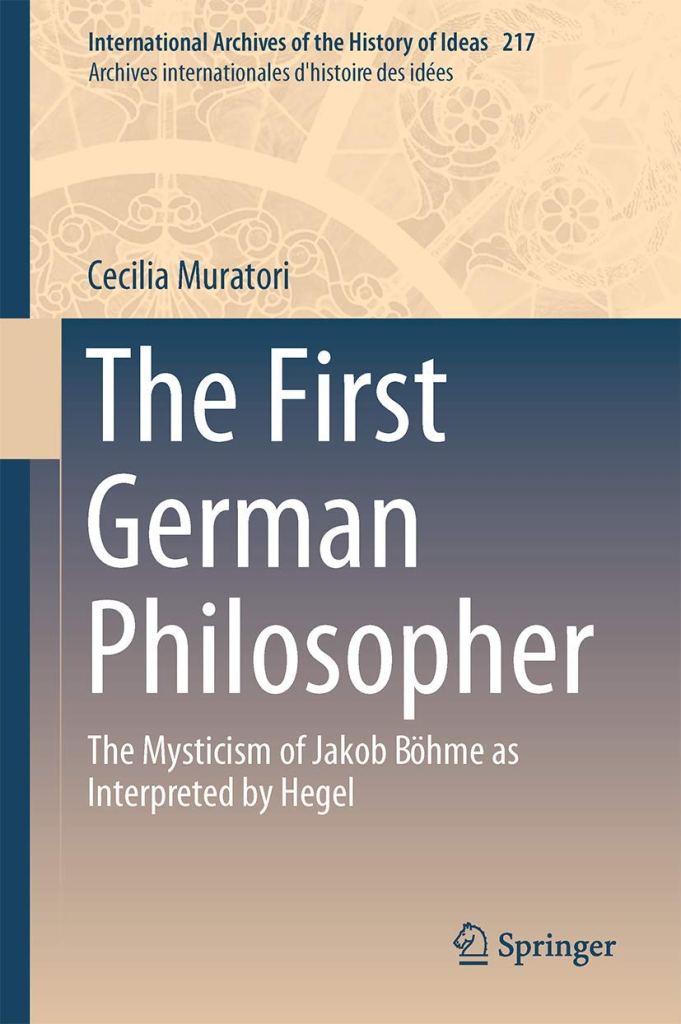
In The First German Philosopher, Cecilia Muratori presents the philosophical exchange between G.W.F. Hegel and the mystical thought of Jakob Böhme, positioning Böhme not merely as an isolated figure within the realm of mysticism but rather as a cornerstone of German philosophical tradition. The book deftly unpacks the historical and intellectual milieu in which Hegel encountered Böhme’s writings, particularly focusing on the late 18th and early 19th centuries, a period marked by a burgeoning interest in mysticism and its implications for philosophy. Muratori carefully delineates how Hegel, through his rigorous engagement with Böhme’s works, sought to rehabilitate the mystic from the obscurity often associated with esotericism, elevating him to a position of significant philosophical relevance.
Muratori argues that Hegel’s characterization of Böhme as “the first German philosopher” emerges from a deep recognition of the latter’s philosophical depth despite his lack of formal education. Hegel’s interpretation of Böhme hinges on the mystic’s conceptualization of the dynamic interplay between God and the Devil, which Hegel identifies as the speculative heart of Böhme’s philosophy. This relationship embodies the dialectical movement that Hegel champions throughout his own works, offering a counter-narrative to the prevailing dismissive attitudes toward mysticism that many contemporary philosophers held. Through precise analysis, the book presents Hegel’s dual approach to mysticism, distinguishing between a speculative mysticism that embraces dialectical reasoning and a pseudo-mysticism characterized by romantic irrationality.
In its first section, the book contextualizes Hegel’s engagement with Böhme, detailing the socio-intellectual currents that shaped their respective philosophical environments. Muratori underscores the historical significance of Böhme’s writings, which gained renewed attention in Germany during the Romantic period, particularly through the lens of influential figures such as Johann Gottlieb Fichte and Friedrich Schelling. These thinkers laid the groundwork for Hegel’s eventual interpretation, even as they approached Böhme with varying degrees of reverence and skepticism. Muratori’s analysis highlights how the early Romantic fascination with Böhme’s life story—his humble origins as a cobbler and the mystical experiences that punctuated his existence—contributed to a broader cultural narrative that sought to reclaim the profound wisdom embedded within Böhme’s often opaque and paradoxical texts.
The second section delves deeper into Hegel’s nuanced reflections on mysticism, challenging the notion that he wholly repudiated the mystical tradition as a form of philosophical engagement. By examining Hegel’s early writings alongside his later works, Muratori illuminates how Hegel’s thoughts on mysticism evolved, revealing a consistent tension between the allure of mystical experience and the demands of rigorous philosophical inquiry. She posits that Hegel saw in Böhme’s writings an opportunity to integrate mysticism into the broader fabric of philosophical discourse, recognizing that Böhme’s thought could be productively reinterpreted to elucidate the dialectical nature of reality itself. This re-evaluation serves to not only situate Böhme within the canon of German philosophy but also to redefine the parameters of mysticism as a valid philosophical pursuit.
Muratori charts the trajectory of Hegel’s interpretation of Böhme, revealing how Hegel’s engagement with Böhme’s works shifted over time—from his initial readings during his Jena years to more comprehensive analyses in his later lectures. She draws attention to the pivotal role that the theme of negativity plays in Hegel’s reading of Böhme, suggesting that this aspect transforms Böhme’s mysticism into a dialectically vibrant approach that resonates with Hegelian thought. Through careful examination of Hegel’s lectures on the philosophy of religion and history, Muratori demonstrates how Hegel increasingly emphasizes the dialectical tensions within Böhme’s philosophy, thereby enhancing the speculative dimension of his thought.
Muratori’s work not only fills a significant gap in Hegel scholarship regarding the philosophical implications of mysticism but also serves as an invitation for contemporary readers to reconsider the broader implications of Böhme’s thought. By presenting a detailed and historically informed account of Hegel’s engagement with Böhme, The First German Philosopher underscores the necessity of reevaluating mystical writings as essential contributions to the philosophical discourse, challenging long-held assumptions that categorize such works as peripheral or irrelevant. Through her rigorous scholarship, Muratori revives interest in Jakob Böhme’s philosophical legacy, positioning him as a vital precursor to the idealistic traditions that would shape subsequent philosophical inquiry, thereby compelling readers to grapple with the enduring questions surrounding the nature of mysticism and its place within the philosophical canon.
 Simon Gros
Leave a comment