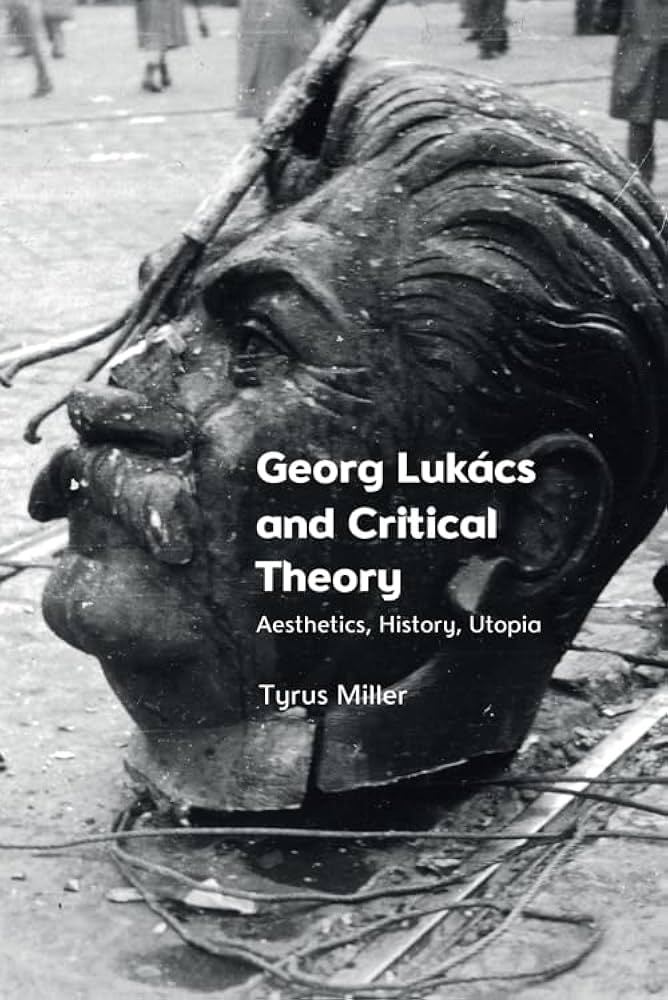
In Georg Lukács and Critical Theory, Tyrus Miller offers a comprehensive examination of the interplay between Georg Lukács’s philosophy and the broader context of critical theory, particularly as it relates to the early Frankfurt School. This exploration is situated within contemporary discussions surrounding authoritarianism, the crises of modernity, and the enduring quest for democratization. Miller draws from a wealth of research and scholarly engagement, showcasing his deep understanding of Lukács’s oeuvre and its resonance with the ideas of other critical theorists such as Herbert Marcuse, Theodor W. Adorno, and Walter Benjamin. By contextualizing these thinkers within a rich historical and intellectual framework, Miller illustrates how their contributions intersect and diverge, creating a tapestry of thought that continues to influence contemporary discourse.
A central theme of Miller’s work is the relationship between aesthetics and politics, which he articulates through a historical lens that examines how Lukács’s ideas evolved in response to the socio-political landscape of his time. Lukács’s early reflections on art and culture, particularly in History and Class Consciousness, reveal his concerns with reification and the alienation experienced under capitalism. Miller emphasizes how these concepts not only critique the commodification of culture but also highlight the potential for art to serve as a site of resistance and a vehicle for revolutionary consciousness. This analysis resonates deeply with the Frankfurt School’s emphasis on the relationship between culture and society, particularly in the context of the rise of fascism and the challenges posed by totalitarian regimes.
Miller further explores the dialectical relationship between high art and mass culture, shedding light on how Lukács and his contemporaries grappled with the complexities of cultural production in the modern world. This examination underscores the necessity of recognizing the interplay between different cultural forms and the socio-political contexts in which they emerge. By analysing the tensions and synergies between high art and mass culture, Miller situates critical theory as a vital framework for understanding the dynamics of cultural production and consumption, particularly in relation to issues of power, ideology, and social change.
Miller engages with the theme of utopia, interrogating how Lukács’s vision of an emancipated society informs the critical project of the Frankfurt School. He posits that Lukács’s conception of utopia is not just a distant ideal but rather a guiding principle that can inspire contemporary movements for social justice and transformation. This perspective invites a reexamination of the role of critical theory in envisioning alternative futures, emphasizing the need for a radical rethinking of societal structures and values. Miller argues that the utopian impulse inherent in Lukács’s thought serves as a counterpoint to the prevailing cynicism in contemporary discourse, challenging readers to consider the possibilities for transformative action in the face of systemic oppression.
Another significant aspect of Miller’s exploration is his focus on the legacy of authoritarianism and the ways in which Lukács’s and the Frankfurt School’s critiques remain relevant in the context of contemporary political realities. He delves into the mechanisms of organized deceit and ideological manipulation that characterize modern governance, drawing parallels to the authoritarian regimes that emerged in the 20th century. This analysis not only highlights the enduring relevance of critical theory in addressing contemporary challenges but also serves as a reminder of the necessity for vigilance in the defence of democratic values and practices. By engaging with the historical context of authoritarianism, Miller underscores the urgency of employing critical theory as a means of resisting oppressive forces and advocating for a more just society.
Miller’s work invites readers to consider the role of the intellectual in the public sphere, particularly in times of crisis. He grapples with the question of how scholars and artists can engage meaningfully with the pressing social issues of their time, emphasizing the importance of cultivating a critical consciousness that is attuned to the nuances of culture and politics. By situating Lukács and the Frankfurt School within the broader tradition of critical engagement, Miller advocates for an approach to scholarship that is both rigorous and socially relevant, urging a commitment to the ideals of justice, equality, and human dignity.
In synthesizing these diverse themes, Miller presents Georg Lukács and Critical Theory: Aesthetics, History, Utopia as a vital contribution to contemporary critical thought. His interdisciplinary approach, which bridges philosophy, literary criticism, visual studies, and political theory, enriches our understanding of the complexities of modern cultural production and its relationship to social and political realities. By articulating a vision of critical theory that is both historically grounded and forward-looking, Miller invites readers to reengage with the legacies of Lukács and the Frankfurt School, encouraging a renewed commitment to the pursuit of emancipation and the cultivation of a more just and equitable society.
Miller’s work serves as a reminder of the power of critical theory to illuminate the paths toward liberation and the necessity of cultivating a critical sensibility that is attuned to the challenges of our time. In an era marked by fragmentation and disillusionment, Georg Lukács and Critical Theory stands as a nod to the enduring relevance of these ideas, offering a compelling vision for a future that embraces the radical possibilities inherent in the intersection of aesthetics, history, and utopia.
 Simon Gros
Leave a comment