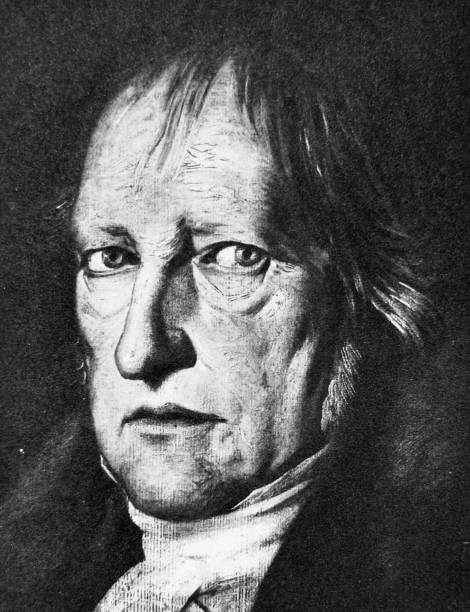
Religion, Rationality and Community: Sacred and Secular in the Thought of Hegel and His Critics by Robert Gascoigne presents an exploration of the relationship between religious belief, human rationality, and communal life as conceived in the philosophy of Hegel and scrutinized by his critics. This study analyses the philosophical attempts of Hegel to reconcile the seemingly contradictory elements of Christianity and Enlightenment rationalism, offering an extensive analysis of how these efforts were subsequently critiqued and opposed by both his followers and opponents in the years surrounding the revolutionary fervour of the 1840s.
Gascoigne situates Hegel within the intellectual and cultural milieu that shaped his thought, particularly the tension between the Christian tradition and the emergent ideals of human autonomy and rational self-determination. The author examines Hegel’s endeavour to create a synthesis that would not only reconcile these tensions but would also elevate Christianity as the foundation of a modern, rational, and ethical community. This synthesis, Hegel argued, was necessary to overcome the alienation that had been a persistent feature of modernity—an alienation that found its roots in both the secularization of thought and the fragmentation of religious life. In Hegel’s view, the incarnation of the divine in the human form of Christ symbolized the ultimate unity of the sacred and the secular, a unity that could potentially resolve the conflicts between personal freedom and communal responsibility, between individual conscience and universal ethical norms.
Gascoigne goes through Hegel’s early writings, which deal with the dichotomy between Christianity and the ideal of a cohesive community, exemplified by the ancient Greek polis. Hegel’s early works are marked by a yearning to recover the spiritual unity and communal life that he believed had been lost in modern society, fragmented by religious wars and political disunity. Hegel’s critique of the contemporary religious landscape is profound; he perceives religion as a divisive force that had contributed to the disintegration of political unity and ethical life in Germany. For Hegel, the challenge was to reshape religion in a way that it could underpin a rational and ethical community, free from the divisive dogmas that had historically caused so much strife. This reformed religion would, in Hegel’s vision, transcend its traditional boundaries and become the very fabric of communal life, inspiring ethical action and providing a spiritual foundation for the state.
Gascoigne then moves on to discuss Hegel’s mature system, where he presents a sophisticated synthesis of religion, speculative philosophy, and the rational state. Here, Hegel attempts to harmonize the seemingly irreconcilable demands of religious faith and rational autonomy by proposing a vision of the state that embodies both divine and human principles. For Hegel’s the state is not merely a political institution but a manifestation of the divine in history, where the rational will of individuals is aligned with the universal ethical norms that constitute true freedom. This synthesis, however, is fraught with tension, as it attempts to balance the transcendent demands of religion with the immanent realities of political and social life.
The subsequent chapters go into the critical reception of Hegel’s synthesis by the Young Hegelians and other radical thinkers of the 1840s. In particular, Gascoigne explores the atheistic humanism of Bruno Bauer and Moses Hess, who vehemently opposed Hegel’s notion of Christian humanism. Bauer, for instance, argued that Hegel’s synthesis was fundamentally flawed because it subordinated human freedom to the constraints of religious belief, which he saw as a relic of human weakness and alienation. For Bauer, true freedom could only be realized through the complete dissolution of religious consciousness, which he regarded as an obstacle to the full development of human reason and political freedom. Hess, on the other hand, took Bauer’s critique further by applying it to the social and economic conditions of his time, advocating for a revolutionary transformation of society that would eliminate the alienation inherent in capitalist production. Hess envisioned a future society where human beings would realize their true nature in a community of equals, free from the exploitation and oppression that characterized the existing social order.
Gascoigne contrasts these radical critiques with the religious responses of Friedrich Schelling and Søren Kierkegaard, who offered a starkly different perspective on the relationship between religion, rationality, and community. Schelling’s late philosophy, as Gascoigne shows, represents a profound departure from Hegel’s idealism. In his philosophy of mythology and revelation, Schelling emphasizes the primacy of religious experience over rational speculation, arguing that the divine cannot be fully comprehended by human reason. For Schelling, the true nature of the absolute is revealed not in the dialectical processes of history but in the myths and revelations that express the deeper truths of human existence. This view leads Schelling to reject Hegel’s vision of the state as the realization of divine reason, positing instead that the secular world is a realm of fallen nature, where the divine can only be glimpsed through the veil of religious symbolism.
Kierkegaard, as Gascoigne explores in the final chapter, offers perhaps the most radical critique of Hegel’s philosophy, attacking its very foundations. Kierkegaard vehemently opposes Hegel’s identification of the rational state with the divine, arguing that such a view negates the true meaning of Christian faith. For Kierkegaard, faith is not a rational endeavour but a deeply personal and passionate relationship with the transcendent God, who exists beyond the realm of human history and reason. He contends that Hegel’s attempt to subsume Christianity within a rational system of thought is a profound misunderstanding of the nature of faith, which cannot be reconciled with the demands of secular civilization. Kierkegaard’s critique extends to the social and political implications of Hegel’s thought, as he rejects both the conservatism of Christendom and the liberalism of his contemporaries, both of which, in his view, distort the true essence of Christian existence.
In his conclusion, Gascoigne reflects on the enduring legacy of Hegel’s thought and its critics, suggesting that the debates of the 1840s continue to resonate in contemporary discussions about the role of religion in public life. The failure of Hegel’s synthesis to achieve a lasting reconciliation between religion and rationality, sacred and secular, has left a profound mark on the intellectual landscape of modernity. The polarization of ideas that characterized the 1840s, between a radical humanism that sought to realize the ideals of the Enlightenment in a secular, political order and a religious conservatism that reaffirmed the transcendent nature of divine truth, has continued to shape the discourse on religion, politics, and community.
Religion, Rationality and Community is thus a deeply philosophical and historically informed study that offers a rich and nuanced account of the complex interplay between Hegel and his critics. Gascoigne’s work is a reflection on the broader questions of how religious belief and rational thought can coexist in a modern society. Through his detailed analysis, Gascoigne invites readers to consider the possibilities and limitations of Hegel’s ambitious project and to engage with the enduring questions it raises about the nature of human freedom, the role of religion in public life, and the possibility of a truly rational and ethical community.
 Simon Gros
Leave a comment