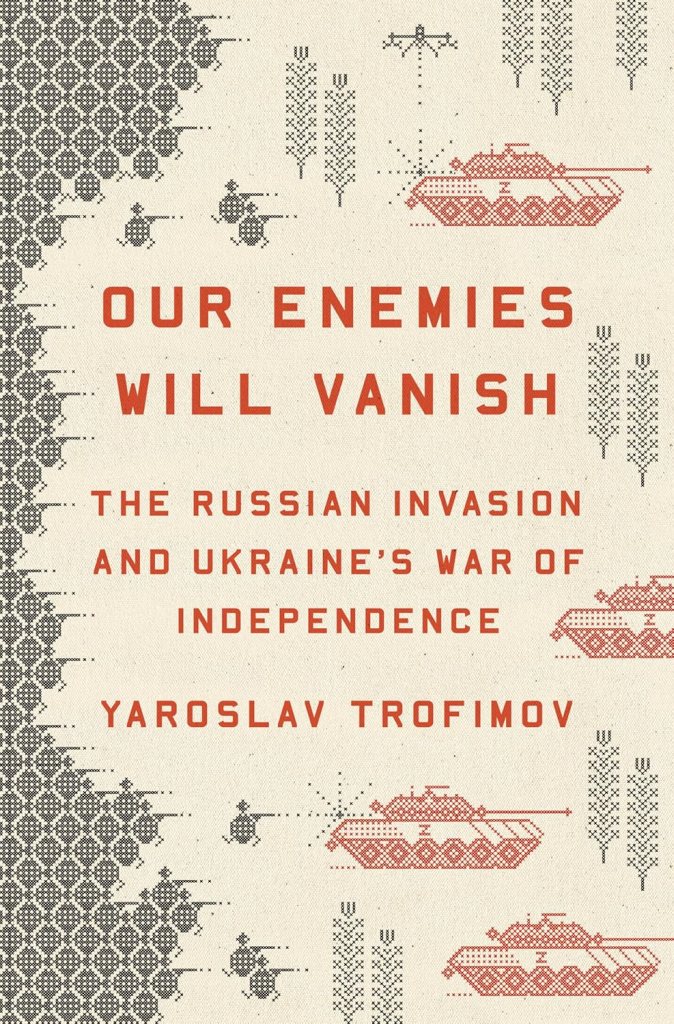
In Yaroslav Trofimov’s chronicle, Our Enemies Will Vanish: The Russian Invasion and Ukraine’s War of Independence, the veil of geopolitical abstraction is lifted to reveal the visceral human drama of Ukraine’s struggle for sovereignty in the face of Russia’s unrelenting aggression. Trofimov, the Ukrainian chief foreign-affairs correspondent for The Wall Street Journal, offers a deeply personal account of the conflict that erupted in February 2022, an event that has not only shaped the course of Ukrainian history but has also reverberated through the geopolitical landscape of the modern world.
Trofimov’s narrative is taken from direct eyewitness testimony, sharp military analysis, and a deep understanding of the Ukrainian national psyche. His account begins in the serene yet ominously premonitory atmosphere of Kyiv on February 23, 2022. On that day, Kyiv, the city where Trofimov was born and which holds the echoes of his family’s history, appeared to bask in a deceptive tranquillity. The city’s daily rhythm was punctuated by the routine vibrancy of its cultural and social life, but beneath this surface lay a burgeoning sense of impending crisis. Trofimov’s narrative juxtaposes this ordinary calm against the backdrop of geopolitical upheaval and the foreboding intelligence about Russia’s imminent invasion.
The book discusses the early days of the invasion, capturing the stark contrast between the optimistic expectations of many Ukrainians, who were unprepared for the full scale of Russia’s assault, and the grim realities on the ground. The author’s personal interactions with key Ukrainian figures, such as Petro Poroshenko and Volodymyr Zelensky, provide intimate insights into the political and emotional landscapes that shaped the national response to the invasion. Poroshenko’s warnings about the invasion and the sudden, intense mobilization of Ukrainian political and military forces are portrayed with a mixture of urgency and reflective analysis.
Trofimov’s narrative skillfully integrates these high-stakes political moments with the experiences of ordinary Ukrainian citizens who were thrust into the crucible of war. The stories of doctors, businesspeople, and schoolteachers who became unlikely heroes in their nation’s fight for survival are presented with a poignant clarity. These personal accounts underscore the broader themes of resistance, solidarity, and the unyielding quest for national identity amidst chaos. The author’s deep connection to his homeland enables him to capture not only the strategic dimensions of the conflict but also its profound human impact.
The book charts the trajectory of the war from its initial stages to its more recent and devastating episodes, such as the intense battles for Kyiv and Bakhmut. Trofimov provides a detailed examination of how Ukrainian forces, despite being vastly outnumbered and outgunned, managed to resist and push back against the formidable Russian military. His analysis extends to the role of the Wagner Group, the controversial Russian paramilitary organization, and its involvement in the protracted and bloody siege of Bakhmut. Through these accounts, Trofimov illustrates the dynamic between military strategy and the indomitable spirit of the Ukrainian people.
Our Enemies Will Vanish also addresses the broader implications of the conflict, particularly its impact on global politics and security. The narrative does not shy away from examining the involvement of Western nations and NATO allies, highlighting how the war in Ukraine has become a focal point of international diplomacy and military strategy. Trofimov’s analysis of the geopolitical ramifications of the conflict provides a sobering reminder of the interconnected nature of modern global affairs and the potential for regional conflicts to escalate into broader confrontations.
The author’s background as a veteran war correspondent adds a layer of credibility and depth to his account. Trofimov’s previous experience reporting from conflict zones, such as Afghanistan and Iraq, is evident in his ability to convey the complexities of war with both precision and empathy. His deep understanding of military strategy, coupled with his personal connection to the Ukrainian experience, allows him to offer a unique perspective on the events he describes.
Our Enemies Will Vanish is a historical account and an exploration of courage, identity, and the struggle for justice in the face of overwhelming odds. Trofimov’s ability to combine personal narratives with strategic analysis creates a compelling and immersive reading experience. The book stands as a testament to the resilience of the Ukrainian people and the enduring significance of their fight for independence and self-determination. Through its detailed and empathetic portrayal of the Ukrainian experience, Our Enemies Will Vanish provides an important reflection on the nature of war.
 Simon Gros
Leave a comment