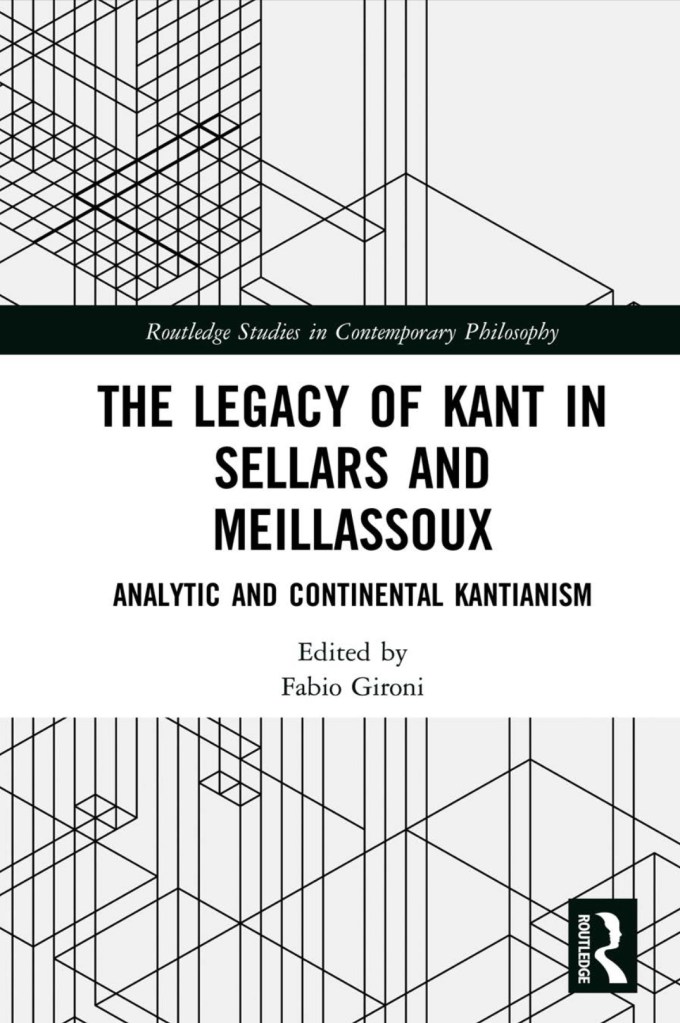
Immanuel Kant’s Critique of Pure Reason remains a cornerstone in the history of philosophy, and its influence stretches far beyond the boundaries of its original publication in 1781. At the heart of Kant’s philosophy is a revolutionary attempt to resolve what he saw as the impasses of metaphysics through his critical method, which seeks to delineate the scope and limits of human knowledge. This effort stands as a guide for both analytic and continental traditions, bridging philosophical debates that persist today.
The contemporary philosophical landscape, especially under the resurgence of speculative realism and new realism, finds itself deeply engaged with Kantian themes, re-evaluating the boundaries between realism, idealism, and naturalism. In particular, the thought of Wilfrid Sellars—an analytic philosopher of the mid-20th century who reimagined Kant’s critical project in light of contemporary scientific understanding—has garnered significant attention from continental philosophers. This convergence of analytic and continental perspectives is of particular interest in the ongoing dialogue about realism and naturalism.
Sellars’ philosophical project, often associated with the Pittsburgh School, is grounded in a sophisticated interpretation of Kant’s ideas. Sellars sought to rescue Kantian insights from the limitations that he perceived in traditional interpretations. Central to Sellars’ work is his critique of the “Myth of the Given,” which he contended was a flawed assumption in epistemological theories. By arguing that sensory experiences are imbued with conceptual structures, Sellars aimed to reframe Kant’s transcendental idealism into a more robust framework that incorporates both empirical and conceptual dimensions. His emphasis on the role of conceptual frameworks in interpreting sensory input aligns with a form of scientific realism, where theoretical entities are seen as indispensable to our understanding of the empirical world.
In contrast, Quentin Meillassoux, a prominent figure in contemporary French philosophy, engages with Kant’s work from a markedly different standpoint. Meillassoux’s speculative materialism represents a radical departure from Kantian constraints, challenging the very premise of what Kant termed the “correlationist” stance—the idea that knowledge is always limited to the correlation between thought and being, never accessing the “in-itself.” Meillassoux’s critique targets what he considers the core limitation of Kantian and post-Kantian philosophy: its inability to affirm the absolute existence of things independent of human perception and conceptual schemes.
Meillassoux’s philosophical endeavor, articulated most notably in his work After Finitude, argues that the Kantian legacy, with its emphasis on the limits of human knowledge and the inaccessibility of the noumenon, is fundamentally flawed. He proposes instead a form of speculative realism that embraces contingency and the principle of unreason. According to Meillassoux, the only absolute is the absolute contingency of everything, including the conditions of our own conceptual and perceptual frameworks. This approach positions Meillassoux in opposition to the idea that philosophical inquiry must always remain within the bounds of human finitude and correlational constraints.
The tension between Sellars’ and Meillassoux’s interpretations of Kant provides a rich field for philosophical investigation. Sellars attempts to preserve the critical insights of Kant while reformulating them to address contemporary issues in epistemology and metaphysics. He navigates a path between maintaining Kant’s critical method and integrating it with a scientifically informed realism. His work seeks to address the challenge of reconciling empirical science with a form of conceptual idealism, suggesting that our understanding of the world is mediated by conceptual frameworks that are themselves shaped by our cognitive capacities.
Meillassoux, on the other hand, rejects the very foundation of correlationism and aims to establish a philosophical system that transcends the limitations imposed by Kantian and post-Kantian thought. His speculative materialism posits that while we can never fully grasp the nature of the in-itself, the principle of contingency allows for the possibility of thinking beyond the constraints of human thought and perception. This radical approach seeks to overcome what Meillassoux sees as the fundamental inadequacy of correlationist philosophies, including Kant’s, in addressing the absolute nature of reality.
In bringing Sellars and Meillassoux into dialogue, contemporary philosophers are engaging with two deeply divergent responses to Kant’s critical project. Sellars’ work can be seen as an attempt to refine and extend Kantian insights, making them compatible with a scientifically informed view of reality. Meillassoux’s speculative realism, meanwhile, represents a more radical break from Kantian limitations, proposing a new metaphysical framework that embraces the absolute nature of contingency.
The scholarly exploration of this dialogue speaks to broader questions about the nature of reality, knowledge, and the limits of human understanding. Sellars and Meillassoux, despite their differing approaches, share a common concern with the legacy of Kantian philosophy and its implications for contemporary metaphysical and epistemological debates. Their work reflects ongoing attempts to grapple with the fundamental questions posed by Kant and to address the evolving challenges of philosophical inquiry in a rapidly changing intellectual landscape.
The legacy of Kant’s Critique of Pure Reason continues to shape philosophical discourse, prompting new generations of thinkers to re-evaluate its principles and implications. In the context of contemporary debates about realism and naturalism, the work of philosophers like Sellars and Meillassoux highlights the enduring relevance of Kantian themes and the ways in which they can be reinterpreted and extended to address new philosophical challenges. Through this ongoing engagement, the critical questions raised by Kant remain at the forefront of philosophical inquiry, driving continued exploration and debate in both analytic and continental traditions.
 Simon Gros
Leave a comment