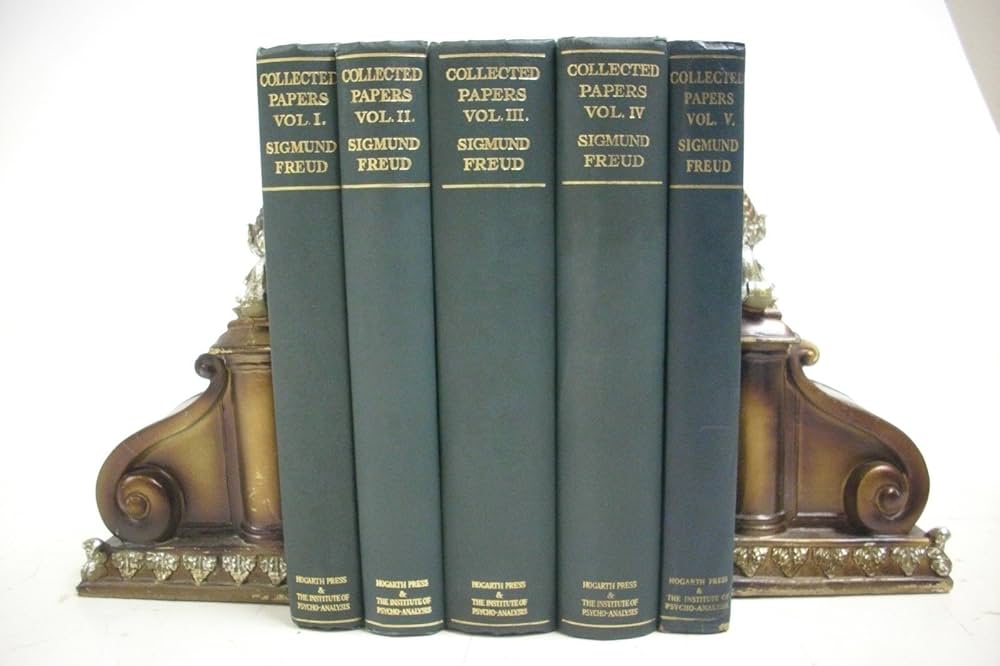
The Collected Papers of Sigmund Freud, translated by Joan Riviere, stand as a comprehensive repository of Freud’s pioneering work in psychoanalysis. This extensive compilation offers a glimpse into the development of Freud’s theories and clinical practices. The collection, digitized for modern accessibility, spans from 1871 to 1939, presenting a narrative of Freud’s intellectual development. The content is organized into five volumes, each curated to reflect the breadth and depth of Freud’s contributions.
Volume I: Early Papers and Theoretical Foundations (1877-1905)
This volume provides an in-depth view of Freud’s foundational work in psychoanalysis, focusing on his early theoretical developments and clinical observations. It begins with Freud’s engagement with Charcot’s theories on hysteria, which significantly influenced his approach to understanding psychological disorders. The volume continues with Freud’s seminal papers on the psychical mechanisms of hysterical phenomena, examining how repressed emotions and conflicts manifest as hysterical symptoms.
Freud’s comparative study of organic and hysterical paralysis provides insights into his early differentiation between neurotic and organic disorders. The volume also addresses Freud’s development of the concept of anxiety-neurosis, including his justifications for separating it from neurasthenia. This period of Freud’s work also involves his responses to criticisms of his theories, particularly regarding the role of sexuality and anxiety in neuroses.
Notable papers in this volume explore obsessions and phobias, discussing their psychical mechanisms and etiology, as well as Freud’s views on heredity and the etiology of hysteria. The later papers in this volume include Freud’s reflections on psychotherapy and his psychoanalytic method, culminating in his views on the role of sexuality in neuroses. These papers mark the development of his foundational theories and methods in psychoanalysis, setting the stage for his subsequent work.
EARLY PAPERS
- “Charcot” (1893)
- “On the Psychical Mechanism of Hysterical Phenomena” (1893)
- “Some Points in a Comparative Study of Organic and Hysterical Paralysis” (1893)
- “The Defence Neuro-Psychoses” (1894)
- “The Justification for Detaching from Neurasthenia a Particular Syndrome: The Anxiety-Neurosis” (1894)
- “A Reply to Criticisms on the Anxiety-Neurosis” (1895)
- “Obsessions and Phobias: Their Psychical Mechanisms and Their Aetiology” (1895)
- “Heredity and the Aetiology of the Neuroses” (1896)
- “Further Remarks on the Defence” (1896)
- “The Aetiology of Hysteria” (1896)
- “Sexuality in the Aetiology of the Neuroses” (1898)
- “On Psychotherapy” (1904)
- “Freud’s Psycho-Analytic Method” (1904)
- “My Views on the Part Played by Sexuality in the Aetiology of the Neuroses” (1905)
On the History of the Psycho-Analytic Movement (1914)
Volume II: Clinical Papers and Technical Developments (1906-1924)
Volume II focuses on Freud’s clinical papers and advancements in psychoanalytic technique. The volume begins with discussions on the application of psychoanalysis in legal contexts, exploring how psychoanalytic insights can inform legal judgments. It continues with analyses of obsessive acts and religious practices, investigating how these phenomena can be understood through psychoanalytic theory.
Freud addresses the sexual enlightenment of children and the complex relationship between hysteria, bisexuality, and sexuality. This volume also includes his critical examination of civilized sexual morality and its impact on modern nervousness, reflecting Freud’s engagement with contemporary social issues.
The volume further delves into Freud’s clinical observations on hysterical attacks, psychogenic visual disturbances, and types of neurotic nosogenesis. Freud’s work on the predisposition to obsessional neurosis and his case studies, such as the dream that bore testimony and infantile mental life, are presented. The volume concludes with Freud’s contributions to understanding paranoia, homosexuality, and the economic problem in masochism.
Additionally, this volume includes papers on psychoanalytic technique, such as the future prospects of psychoanalytic therapy, observations on ‘wild’ psychoanalysis, and recommendations for psychoanalytic practice. Freud’s exploration of transference dynamics, dream interpretation, and other technical aspects of psychoanalysis reflects his ongoing efforts to refine and systematize psychoanalytic practice.
CLINICAL PAPERS
- “Psycho-Analysis and the Ascertaining of Truth in Courts of Law” (1906)
- “Obsessive Acts and Religious Practices” (1907)
- “The Sexual Enlightenment of Children” (1907)
- “Character and Anal Erotism” (1908)
- “Hysterical Phantasies and Their Relation to Bisexuality” (1908)
- “On the Sexual Theories of Children” (1908)
- “Civilized Sexual Morality and Modern Nervousness” (1908)
- “General Remarks on Hysterical Attacks” (1909)
- “Psychogenic Visual Disturbance According to Psycho-Analytical Conceptions” (1910)
- “Types of Neurotic Nosogenesis” (1912)
- “The Predisposition to Obsessional Neurosis” (1913)
- “A Dream Which Bore Testimony” (1913)
- “Infantile Mental Life” (1913)
- “A Case of Paranoia Running Counter to the Psycho-Analytical Theory of the Disease” (1915)
- “A Connection Between a Symbol and a Symptom” (1916)
- “On the Transformation of Instincts with Special Reference to Anal Erotism” (1916)
- “‘A Child is Being Beaten’: A Contribution to the Study of the Origin of Sexual Perversions” (1919)
- “The Psychogenesis of a Case of Homosexuality in a Woman” (1920)
- “Certain Neurotic Mechanisms in Jealousy, Paranoia, and Homosexuality” (1922)
- “The Infantile Genital Organization of the Libido” (1923)
- “Neurosis and Psychosis” (1924)
- “The Economic Problem in Masochism” (1924)
- “The Passing of the Oedipus-Complex” (1924)
- “The Loss of Reality in Neurosis and Psychosis” (1924)
PAPERS ON TECHNIQUE
- “The Future Prospects of Psycho-Analytic Therapy” (1910)
- “Observations on ‘Wild’ Psycho-Analysis” (1910)
- “The Employment of Dream-Interpretation in Psycho-Analysis” (1912)
- “The Dynamics of the Transference” (1912)
- “Recommendations for Physicians on the Psycho-Analytic Method of Treatment” (1912)
- “Fausse Reconnaissance (‘Deja Raconte’) in Psycho-Analytic Treatment” (1913)
- “Further Recommendations in the Technique of Psycho-Analysis. On Beginning the Treatment. The Question of the First Communications. The Dynamics of the Cure” (1913)
- “Further Recommendations in the Technique of Psycho-Analysis. Recollection, Repetition, and Working Through” (1914)
- “Further Recommendations in the Technique of Psycho-Analysis. Observations on Transference-Love” (1915)
- “Turnings in the Ways of Psycho-Analytic Therapy” (1919)
Volume III: Case Studies and Analytical Observations (1905-1924)
Volume III is dedicated to detailed case studies and theoretical observations that illustrate Freud’s application of psychoanalytic theory to individual cases. It includes Freud’s famous cases such as the “Fragment of an Analysis of a Case of Hysteria,” which presents a thorough analysis of a patient’s symptoms and dreams. This case study is pivotal in illustrating Freud’s approach to understanding and treating hysteria through psychoanalysis.
The volume also features “Analysis of a Phobia in a Five-Year-Old Boy,” detailing Freud’s early work on phobias and his application of psychoanalytic techniques to childhood neuroses. This case study provides insights into Freud’s methods for exploring and interpreting phobias in children.
Freud’s “Notes upon a Case of Obsessional Neurosis” is another significant contribution in this volume, offering a comprehensive analysis of obsessional neurosis, including detailed case history extracts and theoretical discussions on obsessional formations and their psychological peculiarities.
The volume further includes “Psycho-Analytic Notes upon an Autobiographical Account of a Case of Paranoia,” examining paranoia through the lens of psychoanalysis, and “From the History of an Infantile Neurosis,” which provides an extensive case study of childhood neurosis and its developmental history.
Overall, Volume III provides an in-depth look at Freud’s clinical work and theoretical insights, demonstrating his application of psychoanalytic theory to a range of psychological conditions.
CASE STUDIES
- “Fragment of an Analysis of a Case of Hysteria” (1905)
- “Analysis of a Phobia in a Five-Year-Old Boy” (1909)
- “Notes Upon a Case of Obsessional Neurosis” (1909)
- “Psycho-Analytic Notes Upon an Autobiographical Account of a Case of Paranoia (Dementia Paranoides)” (1911)
- “From the History of an Infantile Neurosis” (1918)
Volume IV: Metapsychology and Applied Psychoanalysis (1911-1925)
Volume IV provides insight into Freud’s theoretical advancements and their application across various domains of psychoanalysis. It presents Freud’s metapsychological papers, which elaborate on fundamental concepts such as The volume begins with foundational papers on the two principles in mental functioning and the nature of the unconscious, providing a framework for understanding Freud’s theoretical developments.
Freud’s discussions on narcissism, instincts, and repression are central to this volume, offering a detailed examination of these core concepts in psychoanalysis. The papers on the unconscious and the dynamics of dreams expand on Freud’s metapsychological theories, including his work on mourning and melancholia.
The volume also covers Freud’s applied psychoanalysis, addressing topics such as the relationship of the poet to day-dreaming, the antithetical sense of primal words, and contributions to the psychology of love. Freud’s exploration of fairy-tales, mythological parallels, and the theme of the uncanny reflects his interest in the cultural and symbolic dimensions of psychoanalysis.
Additionally, the volume includes Freud’s reflections on war, death, and character types, providing a broader context for his psychoanalytic theories and their relevance to contemporary issues.
PAPERS ON METAPSYCHOLOGY
- “Formulations Regarding the Two Principles in Mental Functioning” (1911)
- “A Note on the Unconscious in Psycho-Analysis” (1912)
- “On Narcissism: An Introduction” (1914)
- “Instincts and Their Vicissitudes” (1915)
- “Repression” (1915)
- “The Unconscious” (1915)
- “Metapsychological Supplement to the Theory of Dreams” (1916)
- “Mourning and Melancholia” (1917)
PAPERS ON APPLIED PSYCHOANALYSIS
- “The Relation of the Poet to Day-Dreaming” (1908)
- “The Antithetical Sense of Primal Words” (1910)
- “Contributions to the Psychology of Love. A Special Type of Choice of Object Made by Men” (1910)
- “Contributions to the Psychology of Love. The Most Prevalent Form of Degradation in Erotic Life” (1912)
- “Contributions to the Psychology of Love. The Taboo of Virginity” (1918)
- “The Occurrence in Dreams of Material from Fairy-Tales” (1913)
- “The Theme of the Three Caskets” (1913)
- “The Moses of Michelangelo” (1914)
- “Thoughts for the Times on War and Death” (1915)
- “Some Character-Types Met with in Psycho-Analytic Work” (1915)
- “A Mythological Parallel to a Visual Obsession” (1916)
- “One of the Difficulties of Psycho-Analysis” (1917)
- “A Childhood Recollection from Dichtung und Wahrheit” (1917)
- “The ‘Uncanny’” (1919)
- “Dreams and Telepathy” (1922)
- “A Neurosis of Demoniacal Possession in the Seventeenth Century” (1923)
Volume V: Later Papers and Reflections (1888-1939)
The final volume encompasses Freud’s later reflections and significant contributions to psychoanalytic theory and practice. This volume includes a range of papers from Freud’s early studies on hypnotism to his later theoretical explorations and responses to contemporary psychoanalytic discourse. It features key works on screen memories, the dynamics of family romances, and the concept of transience.
Freud’s work on screen memories and family romances provides insights into the mechanisms of memory and the role of family dynamics in psychological development. The volume also includes Freud’s reflections on transience, highlighting his philosophical and psychological considerations.
The volume features Freud’s responses to the then actual psychoanalytic discourse, including his thoughts on the resistances to psychoanalysis, the concept of negation, and the nature of humour. Papers on the psychological consequences of anatomical sex differences, fetishism, and Dostoevsky’s parricide offer a range of theoretical and cultural reflections.
Freud’s later contributions, such as his thoughts on religious experiences, libidinal types, and the acquisition of power over fire, illustrate his continued engagement with psychoanalytic theory and its broader applications. The volume concludes with Freud’s reflections on analysis terminable and interminable, constructions in analysis, and the splitting of the ego, providing a comprehensive overview of his mature theoretical perspectives.
EARLY STUDIES AND KEY PAPERS
- “Hypnotism and Suggestion” (1888)
- “Early Studies on the Psychical Mechanism of Hysterical Phenomena” (1892)
- “A Case of Successful Treatment by Hypnotism” (1893)
- “Screen Memories” (1899)
- “A Premonitory Dream Fulfilled” (1899)
- “Family Romances” (1909)
- “On Transience” (1915)
- “Four Prefaces” (1919, 1913, 1919, 1925)
- “A Note on the Prehistory of the Technique of Analysis” (1920)
- “Medusa’s Head” (1922)
- “Two Encyclopaedia Articles” (1922)
- “Remarks Upon the Theory and Practice of Dream-Interpretation” (1923)
- “Some Additional Notes Upon Dream-Interpretation as a Whole” (1925)
- “The Resistances to Psycho-Analysis” (1925)
The Collected Papers of Sigmund Freud is a collection of academic texts and a demonstration of the origins and development of psychoanalytic thought. These papers reflect Freud’s evolving contributions to psychoanalysis over his career. Through its five volumes, readers are invited to engage with Freud’s intellectual legacy in a format that underscores the depth and complexity of his pioneering work.
 Simon Gros
Leave a comment