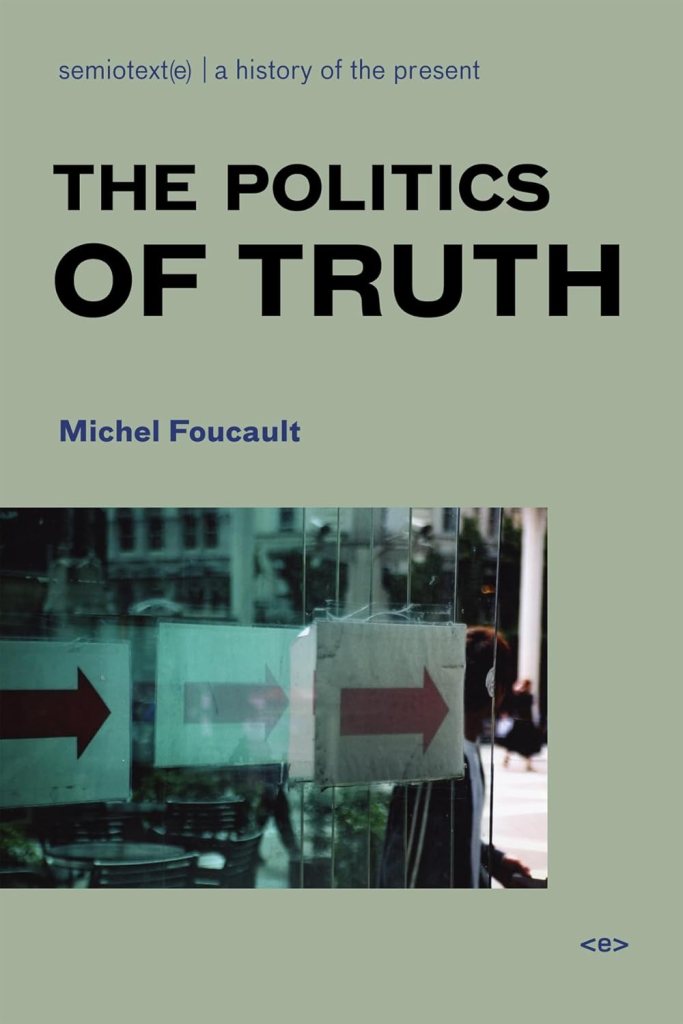
The Politics of Truth by Michel Foucault offers a crucial exploration of the conceptual and historical intersections between enlightenment, political critique, and the evolution of modern philosophy. This comprehensive collection draws from a range of unpublished essays and lecture transcripts delivered by Foucault from 1978 to 1984, providing an essential lens into the final phase of his intellectual journey. The book situates Foucault’s reflections within a broader historical and philosophical context, tracing the lineage of his thought back to Immanuel Kant’s seminal question, “What is Enlightenment?” posed in 1784, and examining its reverberations through the 20th century.
At the heart of Foucault’s inquiry is the engagement with Kant’s foundational text, which initially interrogates the nature of enlightenment and the implications of its ideals for contemporary politics and society. Foucault’s response to Kant, articulated in his later works, reframes the Enlightenment as not merely an historical period but as a persistent and evolving discourse that challenges the assumptions and practices of modernity. This collection elucidates how Foucault’s critique extends beyond Kantian frameworks, engaging with the revolutionary spirit and the subsequent philosophical and political upheavals of the 20th century.
The volume is divided into thematic sections that traverse significant intellectual terrain, including reflections on enlightenment, revolution, and the Frankfurt School. Foucault’s essays and lectures explore the Enlightenment’s complex legacy, dissecting its role in shaping contemporary understandings of reason, politics, and power. He delves into the philosophical debates surrounding modernity, juxtaposing his perspectives with those of the Frankfurt School and other critical theorists. This dialogue underscores the critical shifts in thought from the early to the late 20th century, revealing the dynamic interplay between different schools of philosophy and their impact on contemporary critical theory.
A notable feature of this collection is its engagement with the intellectual exchange between Foucault and his contemporaries, particularly Jürgen Habermas. The book documents the philosophical contention that emerged from their debate, with Habermas critiquing what he perceived as the retrogressive tendencies of post-war French philosophy. In contrast, Foucault’s work seeks to reframe enlightenment discourse, emphasizing a more agonistic and problematizing approach to critical thought. This disagreement highlights the broader shifts within Continental philosophy and the evolving landscape of political and philosophical critique.
Foucault’s reflections in The Politics of Truth also address the political ramifications of enlightenment ideals, examining how the revolutionary fervour of earlier centuries has transformed and how contemporary political movements and ideologies navigate these legacies. The volume presents Foucault’s engagement with the broader socio-political context of his time, including his reflections on East European dissidence, the impact of the 1968 uprisings, and the philosophical implications of post-Marxist thought. His insights offer a critical perspective on the ways in which historical events and political shifts have redefined the parameters of enlightenment and modernity.
Additionally, the book includes a range of contributions from notable scholars and intellectuals, such as Sylvère Lotringer and John Rajchman, who provide context and commentary on Foucault’s work. These contributions enrich the reader’s understanding of Foucault’s intellectual milieu and the broader debates within which his ideas were situated.
Overall, The Politics of Truth is a testament to Foucault’s enduring influence and his rigorous engagement with the philosophical and political questions of his time. It is an essential text for anyone seeking to understand the intersections of enlightenment thought, political theory, and contemporary philosophy, offering a deep and nuanced exploration of the evolving discourse surrounding truth, power, and critique.
 Simon Gros
Leave a comment