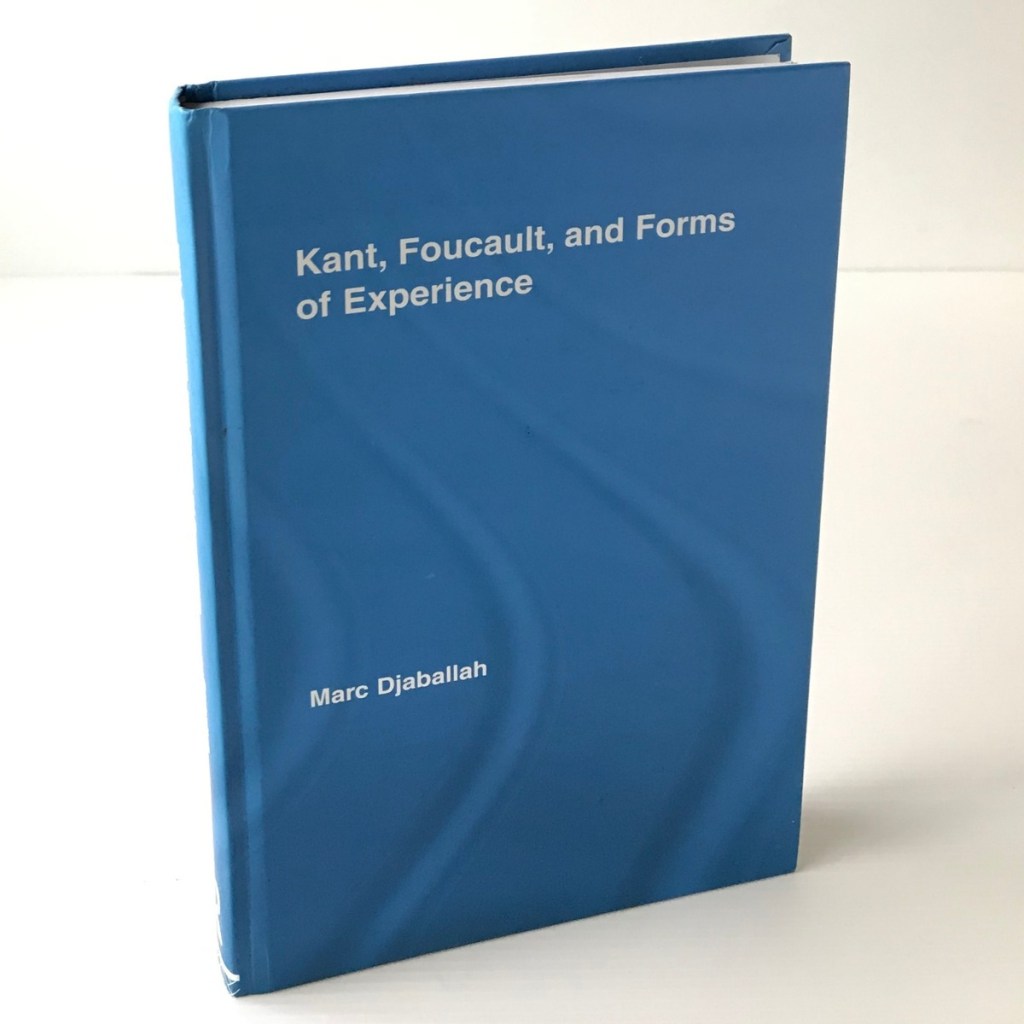
In Kant, Foucault, and Forms of Experience, Marc Djaballah offers a sophisticated analysis of the intellectual relationship between Immanuel Kant and Michel Foucault. This study proposes that Foucault’s historical analyses, often perceived as skeptical of universal knowledge, should instead be understood as a distinct variant of Kantian criticism. Djaballah argues that despite their apparent differences, Foucault’s method is deeply rooted in Kantian thought, providing a novel perspective that challenges conventional interpretations of both philosophers.
Djaballah’s exploration begins by addressing the limited scholarly focus on the Enlightenment in previous treatments of Kant and Foucault. He contends that this narrow focus obscures a more complex and varied relationship between the two thinkers. The book argues that Foucault’s use of Kant’s discussion of the Enlightenment, particularly Kant’s depiction of humanity’s “age of majority” as a historical and intellectual attitude rather than a chronological period, is foundational to understanding his philosophical project. Djaballah highlights how Foucault’s engagement with Kant goes beyond this well-trodden theme, tracing its sources and implications through Foucault’s early and late works.
Central to Djaballah’s analysis is the concept of the “Kantian enigma,” a literary and epistemological figure that Foucault employs to frame his critique of modernity and historical thought. Drawing on Roger Caillois’s analysis of the enigma, Djaballah shows how Foucault uses this figure to articulate a complex relationship with Kantian thought. The enigma, as explored through Caillois’s schema, represents a form of problem that implicitly contains its own solutions and challenges the boundaries of knowledge. Djaballah examines how this concept functions within Foucault’s work, offering a new way of understanding the methodological and thematic parallels between Foucault’s and Kant’s critical practices.
Djaballah’s study reconstructs Kant’s theoretical framework to reveal a unified discursive practice that aligns with Foucault’s historical analyses. This approach reinterprets Foucault’s skepticism about universal knowledge not as a departure from rationalist traditions but as an innovative extension of Kantian critique. By focusing on the formal aspects of their discursive practices, Djaballah provides a nuanced understanding of how Foucault’s methods resonate with and transform Kantian ideas.
The book also engages with Foucault’s fragmented and enigmatic references to Kant, arguing that these scattered remarks can be unified under a coherent standpoint. Djaballah’s analysis situates Foucault’s intellectual trajectory within a broader context of Kantian thought, demonstrating how the “Kantian enigma” serves as a methodological and thematic touchstone in Foucault’s work.
Marc Djaballah’s Kant, Foucault, and Forms of Experience is an essential read for scholars of philosophy interested in the intersections between Kantian and Foucauldian thought. The book is a crucial contribution to Foucault studies and Kantian philosophy, offering a fresh and comprehensive perspective on their complex relationship and the evolution of critical practices across intellectual traditions. Djaballah’s rigorous scholarship and innovative approach provide a profound re-evaluation of the philosophical connections between these two influential figures, offering new insights into the nature of criticism and the structure of experience.
 Simon Gros
Leave a comment