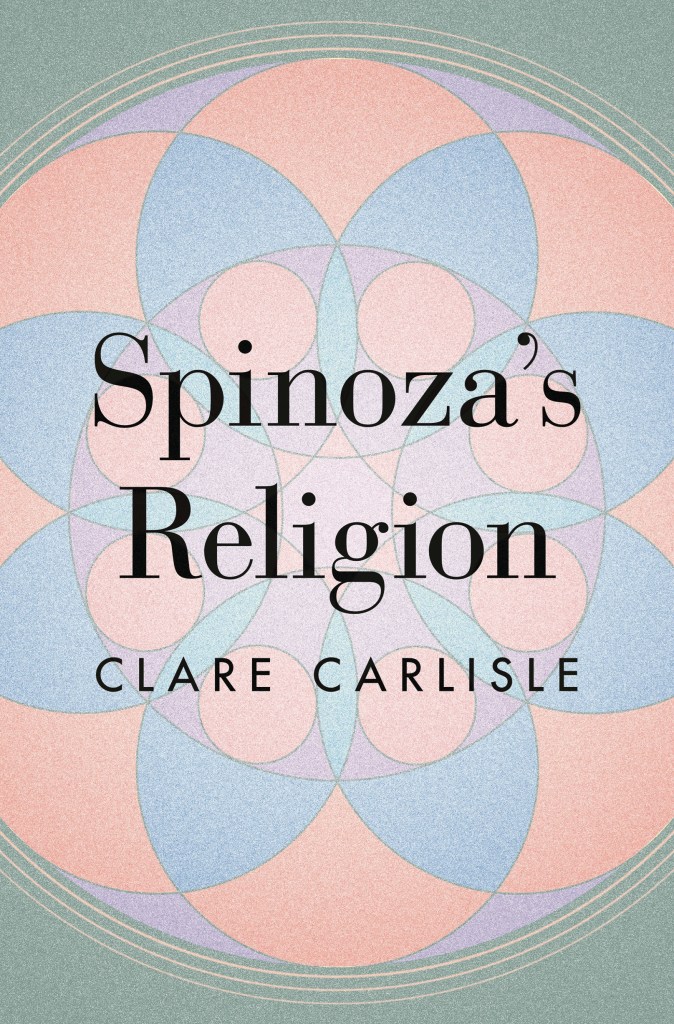
In Spinoza’s Religion, Clare Carlisle accomplishes a transformative re-evaluation of Benedict de Spinoza’s philosophical masterwork, the Ethics. While Spinoza is frequently positioned in intellectual discourse either as a disenchanted atheist or as an exuberant pantheist, Carlisle challenges these dichotomous interpretations, presenting a nuanced and bold re-conceptualization of Spinoza’s thought that transcends traditional categories of religiosity.
Carlisle asserts that Spinoza’s philosophical system should not be simplistically categorized as either religious or secular. Instead, she proposes that his work embodies a distinctive form of spirituality—one that is neither conventionally theistic nor atheistic but rather represents an innovative and comprehensive approach to understanding the divine.
The analysis places the question of religion at the heart of Spinoza’s philosophy, yet resolutely avoids assimilating Spinozism into Christian doctrine. She illustrates that Spinoza’s engagement with theological questions occurs within a broader philosophical context that defies conventional religious categories. By unravelling Spinoza’s enigmatic ideas about eternal life and the intellectual love of God, Carlisle uncovers a Spinozist vision of religion that seamlessly integrates self-knowledge, desire, practice, and embodied ethical living, aiming toward an ideal of “highest happiness”—or the ultimate resting in God.
The book delves into Spinoza’s philosophical project not as an isolated endeavour but as a response to the religious and intellectual milieu of his time. Carlisle’s interpretation brings to light how Spinoza’s Ethics interacts with the prevailing Christian thought of the seventeenth century while simultaneously critiquing and reconstructing traditional religious concepts. This approach allows Carlisle to present Spinoza as a radical thinker who, rather than rejecting religion outright, redefines it in ways that challenge modern assumptions about what religion can and should be.
Carlisle’s work is a critical intervention in the ongoing debate about Spinoza’s place in the history of philosophy and religion. By demonstrating that Spinoza’s philosophy is deeply religious in a non-traditional sense, Carlisle prompts readers to reconsider not only Spinoza’s own religious position but also the very nature of religion itself. The book challenges the binary oppositions that have long framed discussions about religion, inviting a rethinking of the concept of religion as it has evolved through modernity.
As Carlisle articulates, Spinoza’s conception of religion is not about adherence to dogma or the practice of ritual worship but rather about cultivating a virtuous and joyful life through an understanding of the divine as immanent in all things. This radical rethinking opens up new possibilities for philosophical and theological reflection, suggesting that Spinoza’s Ethics provides a blueprint for an alternative modernity—one that harmonizes deep spiritual insight with a rigorous, rational approach to understanding our place in the universe.
Clare Carlisle presents a compelling case for the importance of religion in Spinoza’s vision of human fulfilment, offering a richly detailed and carefully argued reinterpretation of the Ethics. Her work challenges readers to rethink not only Spinoza’s philosophy but also the very concept of religion itself, proposing an inclusive and spiritually meaningful framework that resonates with the complexities of modern life. Carlisle’s book is a vital addition to Spinoza scholarship, inviting both philosophers and general readers to explore the depths of Spinoza’s thought and its enduring relevance for contemporary spiritual and ethical inquiry.
 Simon Gros
Leave a comment