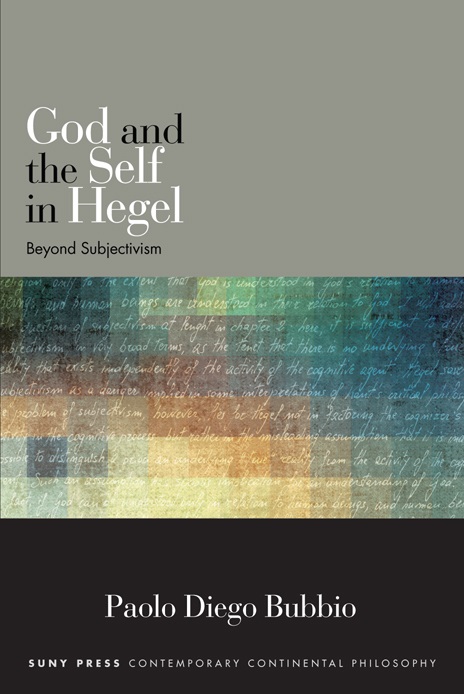
In God and the Self in Hegel, Paolo Diego Bubbio embarks on a philosophical exploration of Hegel’s conception of God and the self, demonstrating how these core elements can unlock a resolution to the pervasive issues of subjectivism that have long troubled both the philosophy of religion and metaphysical inquiry. Bubbio’s work offers a fresh reconstruction of Hegel’s thought, revealing that a deeper understanding of God’s relationship to humanity and vice versa holds the key to overcoming the limitations of subjectivist perspectives.
Central to Bubbio’s argument is the assertion that Hegel’s idealistic metaphysics provides a way to transcend the subjectivist notion that reality is merely a construct of cognitive agents. By reinterpreting God not as an isolated, abstract entity but as integrally connected to human experience, and by recognizing that human beings are fundamentally defined through their relationship with the divine, Hegel’s philosophy opens up a path for recovering and revitalizing the substantive content of religious and metaphysical claims.
Bubbio delves into traditional theological issues—such as the ontological argument, the doctrine of the Trinity, and the implications of the “death of God”—to highlight how Hegel’s philosophical approach offers a comprehensive solution to the challenges posed by Kantian subjectivism. Rather than setting the mind against the world, Hegel’s framework envisions a dialectical process where the divine and human realms are interconnected, thus allowing for a more cohesive understanding of reality that avoids the pitfalls of subjectivism.
The book rigorously analyzes Hegel’s treatment of these issues, positioning his thought within both its historical context and its modern implications. Bubbio navigates the dense terrain of Hegelian philosophy with clarity and precision, elucidating how Hegel’s insights into the nature of God and the self provide a robust alternative to the fragmented perspectives often found in contemporary metaphysical debates.
In God and the Self in Hegel, Bubbio presents a transformative reading of Hegel’s work, arguing that an appreciation of the relational dynamics between God and the self not only clarifies Hegel’s philosophical project but also offers a means to address fundamental issues in metaphysics and the philosophy of religion. Through this detailed analysis, Bubbio provides a valuable contribution to the understanding of Hegel’s thought and its relevance for overcoming the constraints of subjectivism in philosophical discourse.
 Simon Gros
Leave a comment