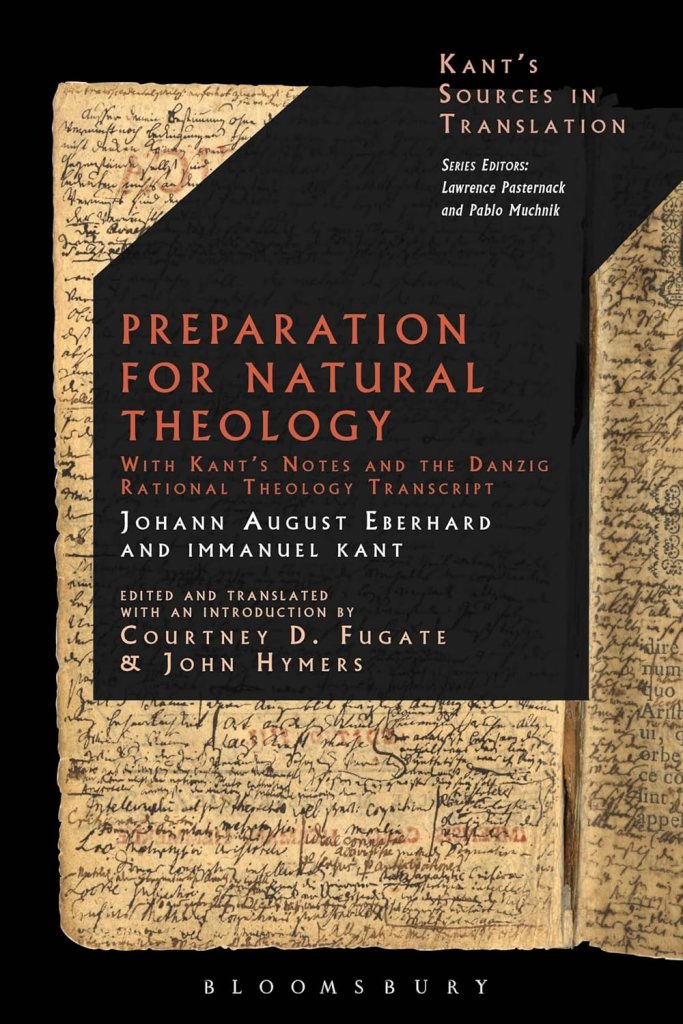
Preparation for Natural Theology presents a landmark contribution to Kantian scholarship and the broader field of 18th-century philosophy. This curated volume brings together Johann August Eberhard’s seminal text, Preparation for Natural Theology (1781), and outlines its influential role in shaping Immanuel Kant’s philosophical doctrine, offering the first complete English translation of this foundational work.
Eberhard’s Preparation for Natural Theology was crafted as a comprehensive textbook for courses on natural theology, its content reflecting the vibrant intellectual debates of late Renaissance and early modern theology. This text was instrumental in shaping Kant’s own philosophical development, particularly in his understanding of practical cognition, moral, and religious concepts. By delving into Eberhard’s work, one uncovers the intellectual substratum that informed Kant’s renowned Lectures on The Philosophical Doctrine of Religion. Eberhard’s influence is particularly notable in Kant’s critical writings, such as the Groundwork of the Metaphysics of Morals and the Critique of Practical Reason.
This volume not only includes Eberhard’s text but also Kant’s extensive handwritten notes, previously untranslated, providing invaluable insight into Kant’s engagement with Eberhard’s ideas. The inclusion of the Danzig transcript of Kant’s lectures on rational theology further enriches the scholarly examination, revealing the nuances of Kant’s interpretative shifts and philosophical expansions beyond Eberhard’s original formulations.
The editors, Courtney D. Fugate and John Hymers, both esteemed scholars from the Katholieke Universiteit Leuven, have provided an in-depth introduction situating Eberhard’s work within the broader landscape of 18th-century theology and philosophy. Their scholarly apparatus includes a dual English-German / German-English glossary, a concordance, and detailed explanatory footnotes that enhance the accessibility and depth of the translation.
The volume has been acclaimed for its thoroughness and scholarly precision. Reviewers have lauded it as essential reading for those invested in the evolution of Kant’s philosophy and Enlightenment religious thought. Preparation for Natural Theology is seen as a crucial resource for understanding Kant’s explicit religious doctrines and moral philosophy, shedding light on previously unexplored aspects of his work. The translation opens new avenues for research, potentially recalibrating existing interpretations of Kant’s religious and moral theories.
Eberhard’s Preparation operates as a comprehensive exploration of metaphysical principles and their relation to rational theology, offering a Platonic dimension to his natural theology. The editors argue that Eberhard’s Platonic theory of universal ideas serves as a central organizing principle for his theological discourse. This volume provides a detailed examination of these ideas and their implications for Kantian and post-Kantian thought.
The introduction, while thorough, relies somewhat on older biographical sources, and there is a noted absence of recent German scholarship on Eberhard. The editors’ decision to present Eberhard’s theology in a more generalized manner might leave some questions unanswered about his specific theological commitments and their relation to Kant’s philosophy. Nevertheless, the volume’s presentation of Kant’s marginalia and lecture transcripts is executed with precision, offering a rich, multifaceted view of Kant’s engagement with Eberhard’s ideas.
Targeted primarily at Kant scholars, early modern philosophy experts, and intellectual historians, this volume is particularly valuable for those invested in the detailed study of Kant’s philosophical development and 18th-century theological discourse. While the high cost of the physical copy may be a barrier for individual scholars, the comprehensive nature of the translation and accompanying scholarly tools make it an invaluable addition to university libraries and academic collections.
Preparation for Natural Theology is a pivotal resource that illuminates the intricate interplay between Eberhard’s natural theology and Kant’s philosophical evolution, providing profound insights into the development of modern religious and moral thought.
 Simon Gros
Leave a comment