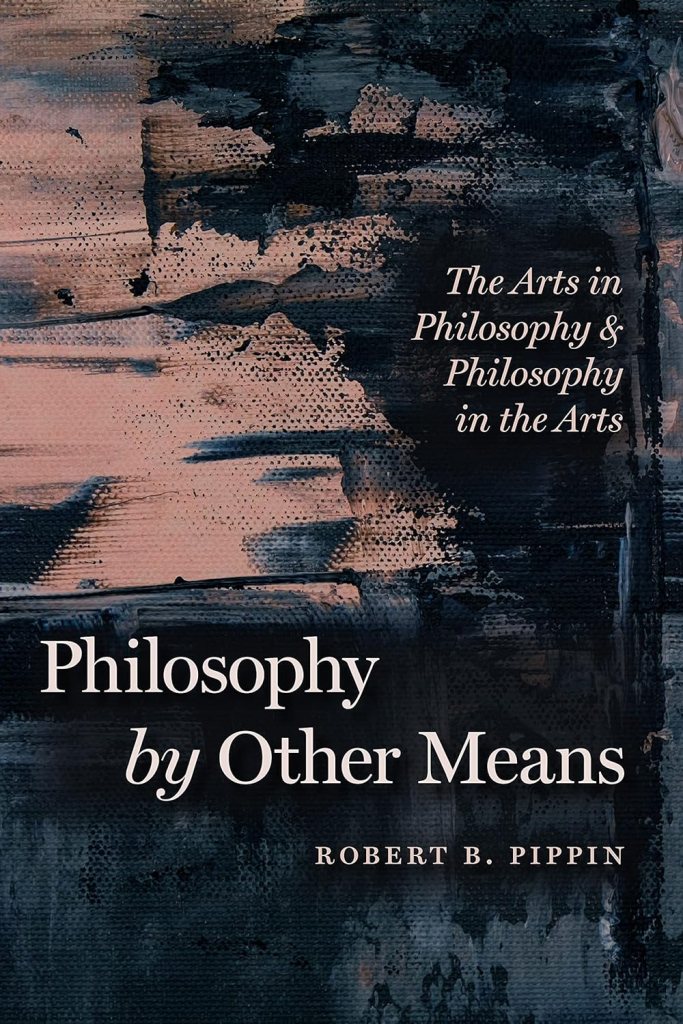
In Philosophy by Other Means, Robert B. Pippin extends his lifelong exploration of the intricate relationship between philosophy and the arts. This collection of essays navigates the rich intersections where aesthetic objects and philosophical reflection converge, revealing how the arts embody and provoke philosophical inquiry in ways that transcend traditional academic boundaries.
Pippin’s examination is rooted in the belief that certain works of art—whether novels, films, or visual artworks—cannot be fully understood without considering the philosophical dimensions integral to their creation and interpretation. He argues that aesthetic objects demand a form of philosophical criticism that goes beyond mere analytical discourse. This approach is essential not only for a deeper appreciation of the arts but also for the enrichment of philosophical thought itself.
The book is divided into two main sections. The first section explores how major philosophers such as Kant, Hegel, and Adorno have addressed the relationship between art and philosophy. Pippin delves into their theoretical frameworks, demonstrating how these thinkers perceived the philosophical significance of aesthetic experience and its role in human understanding. For example, Kant’s ideas on the sublime and beautiful, Hegel’s notion of the Absolute, and Adorno’s critical theory all serve as foundational pillars for Pippin’s arguments.
The second section shifts focus to specific artworks and literary pieces, treating them as instances of philosophical reflection. Pippin provides close readings of novels by Henry James, Marcel Proust, and J.M. Coetzee, illustrating how these works engage with and elucidate philosophical issues. For instance, Henry James’s exploration of moral experience in What Maisie Knew reflects the complexities of modern ethical life, while Proust’s In Search of Lost Time delves into the nature of memory, identity, and the passage of time. Coetzee’s novels, meanwhile, often interrogate themes of suffering, justice, and the human condition.
Pippin’s critical approach is exemplified in his analyses of film and visual art. He contends that cinema, particularly the works of directors like Hitchcock and the Dardenne brothers, provides a unique medium for philosophical exploration. Films such as Vertigo and La Promesse are not simply narratives but are structured to provoke deep reflection on themes such as identity, morality, and human agency. Pippin’s insights into film noir, with its emphasis on ambiguity and moral complexity, further illustrate how this genre challenges conventional notions of intentionality and ethical responsibility.
Throughout Philosophy by Other Means, Pippin underscores that philosophical criticism involves an engagement with the arts that acknowledges their capacity to address and reflect upon philosophical problems. He argues that artworks are not just objects for aesthetic appreciation but are dynamic sites of philosophical engagement. This perspective is influenced by Hegelian thought, particularly the idea that art and philosophy share the same content but express it through different modalities. For Hegel, art provides a sensuous, immediate presentation of ideas that philosophy later articulates conceptually.
Pippin’s essays highlight the importance of understanding art as a form of thought that can illuminate philosophical questions. He posits that the arts offer insights that are often out of reach for philosophy in its traditional, discursive form. This notion is central to his critique of the modern separation between aesthetic and philosophical discourse. By integrating the two, Pippin demonstrates that philosophical inquiry can be deeply enriched by critical engagement with the arts, and that art can achieve a philosophical depth that enhances our understanding of both fields.
The critical reception of Philosophy by Other Means acknowledges Pippin’s significant contributions to both philosophy and aesthetics. Reviews praise his ability to navigate these disciplines with precision and grace, offering a model for how philosophical questions can illuminate literature and art, and vice versa. Pippin’s work is seen as a vital and rewarding exploration for scholars in both fields, providing a fresh perspective on the enduring question of the relationship between philosophy and the arts.
 Simon Gros
Leave a comment