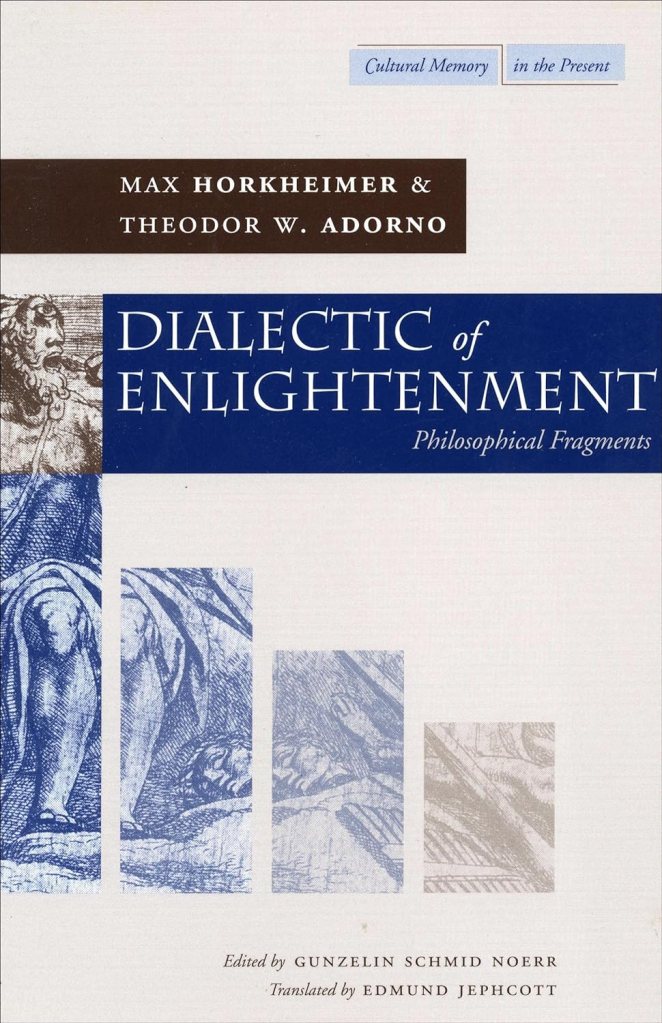
In the Dialectic of Enlightenment, Max Horkheimer and Theodor Adorno engage in a crucial critique that transcends mere historical analysis, delving into the very essence of Western civilization’s trajectory from myth to modernity. Originally penned clandestinely during World War II and formally published in 1947, their work serves as a cornerstone of the Frankfurt School’s Critical Theory.
The authors’ ambition was audacious: to decipher humanity’s descent into a new barbarism amidst the promises of enlightenment. They trace a sweeping narrative from the birth of Western subjectivity, emerging from ancient struggles against natural forces enshrined in myth, to contemporary crises. Here, the detachment of science from practical life, the sterilization of morality into mere forms, and the insidious manipulations of culture—all underpin a society rife with paranoid structures and virulent anti-Semitism.
Central to their thesis is the notion that Western reason, which sought mastery over external nature and societal norms, has paradoxically become entangled in a dialectic of self-destruction. The horrors of National Socialism, far from aberrations, are revealed as symptomatic of deep-seated flaws within Western civilization itself.
In their exploration, Horkheimer and Adorno unearth the roots of enlightenment thinking in myth, positing a dialectical relationship where myth itself embodies aspects of enlightenment, and enlightenment inevitably regresses into myth. This fundamental paradox challenges conventional narratives of progress and rationality, suggesting instead a cyclical interplay of ideas and historical forces.
This new translation of Dialectic of Enlightenment, enriched with textual variants and critical commentary, situates the work within the evolving landscape of Critical Theory. It invites readers to re-evaluate not only historical events but also the philosophical underpinnings of contemporary society, prompting a deeper reflection on the implications of reason, myth, and their complex interplay in shaping human experience.
Ultimately, Horkheimer and Adorno compel us to confront uncomfortable truths about the limits of enlightenment, offering a profound meditation on the trajectory of Western civilization and the enduring relevance of their critical insights in an increasingly fragmented world.
 Simon Gros
Leave a comment