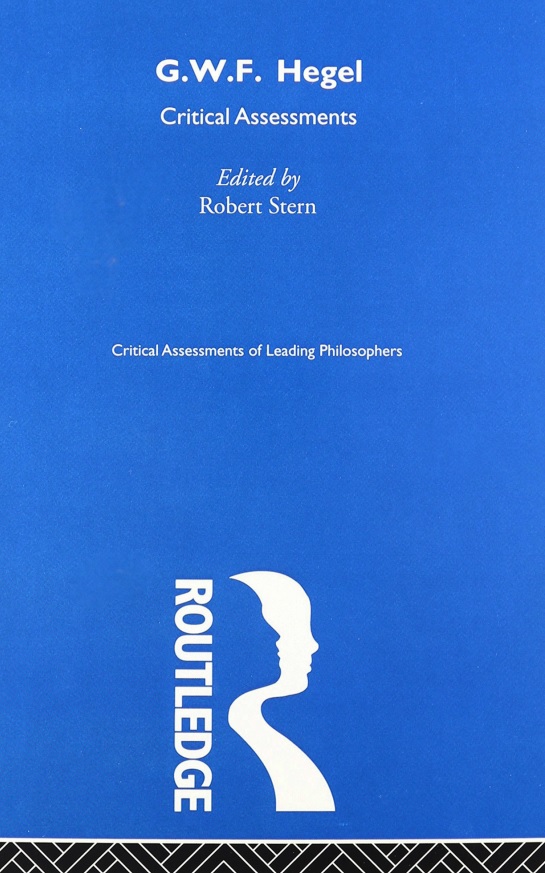
Going through the depths of Hegel’s philosophical universe, Robert Stern’s monumental work, G.W.F. Hegel: Critical Assessments, spanning four volumes, stands as a definitive compendium illuminating the sprawling legacy of the nineteenth century’s preeminent thinker. Hegel’s oeuvre, marked by its profound influence on subsequent European thought, resounds with a complexity that defies singular categorization. From his dialectical method to his controversial theological and political stances, Hegel’s ideas have sparked vigorous debate across generations, positioning him as both a guide and a battleground in the panorama of intellectual history.
Stern’s anthology meticulously gathers and dissects the myriad interpretations of Hegel that have emerged since his passing in 1831, showcasing a spectrum of perspectives from luminaries across philosophical traditions. Volume I delves into the foundational nineteenth-century readings, juxtaposing critiques from contemporaries like Marx and Feuerbach alongside supportive analyses from Rosenkranz and Stirling, capturing the polarities that Hegel’s thought engendered in his time.
Volume II unfolds a variety of late nineteenth- and twentieth-century readings, chronicling the evolution of Hegelianism from British Hegelianism through to the incisive critiques of the Frankfurt School. From Dewey’s pragmatic insights to Adorno’s critical theory, Hegel’s enduring relevance is laid bare through lenses as diverse as existentialism, phenomenology, and historicism.
Volume III concentrates on Hegel’s magnum opus, Phenomenology of Spirit, and his Logic, offering in-depth examinations by modern scholars on the intricate pathways of Hegel’s dialectical method and metaphysical constructs. Here, Hegel’s treatment of consciousness, identity, and the interplay of subjectivity and objectivity are subjected to rigorous scrutiny, illuminating the enduring ambiguities and profundities of his philosophical framework.
Volume IV widens the lens to encompass Hegel’s philosophical cosmos of nature, mind, ethics, politics, history, art, and religion. From the dialectics of civil society to the grand sweep of world history, Hegel’s expansive vision of the human experience is probed and reconsidered in light of contemporary philosophical inquiries, offering fresh perspectives on his lasting legacy in ethics, politics, aesthetics, and theology.
In G.W.F. Hegel: Critical Assessments, Robert Stern invites readers into a scholarly odyssey through the corridors shaped by Hegel’s towering intellect. With each volume specifically curated to provide context and clarity, this collection serves as an indispensable resource for scholars and enthusiasts alike, navigating the nuanced contours of Hegel’s thought while charting its profound impact on the landscape of modern philosophy.
 Simon Gros
Leave a comment